





Introduction: The Heart of the Swiss Landscape
The Swiss Alps are not just a geographical feature; they are an integral part of Switzerland’s identity, offering an unrivaled landscape of towering peaks, serene valleys, and glaciers that stretch over 700 kilometers across the country. Famous for their dramatic beauty and vast recreational offerings, the Swiss Alps have become a global symbol of natural magnificence, attracting adventurers, nature lovers, and travelers from around the world.
From skiing in the winter to hiking in the summer, the Swiss Alps offer activities for every season, while also serving as a hub for scientific research on climate change and alpine ecosystems. This article explores the geography, history, tourism, and conservation efforts of the Swiss Alps, providing an in-depth look at why this mountain range remains one of the most iconic natural wonders in the world.
1. Geography and Formation of the Swiss Alps
1.1. The Formation of the Swiss Alps
The Swiss Alps are part of the larger Alpine mountain range, which stretches across several countries in Europe, including France, Italy, Austria, and Slovenia. These mountains were formed through the process of tectonic plate collisions between the African and Eurasian plates over 100 million years ago. As these plates collided, they created the complex geology that is visible today in the steep cliffs, ridges, valleys, and glaciers.
- Tectonic Processes: The folding, faulting, and uplifting of rocks during the collision of these plates created the dramatic peaks that define the Swiss Alps today.
- Glacial Influence: During the Ice Age, massive glaciers carved out deep valleys and fjords, shaping the present-day landscape of the Alps, leaving behind iconic features such as U-shaped valleys and hanging glaciers.
Today, the Swiss Alps are divided into several subranges, with some of the highest and most famous peaks being the Matterhorn, Mont Blanc, and the Jungfrau.
1.2. Key Peaks and Ranges
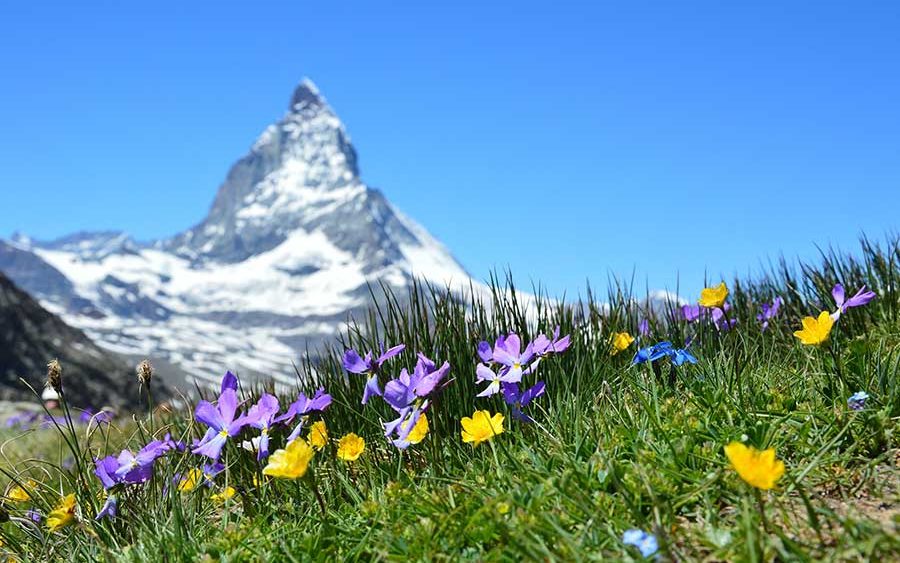
- Matterhorn: One of the most recognizable peaks in the world, the Matterhorn stands at 4,478 meters and attracts climbers and photographers alike for its striking pyramidal shape.
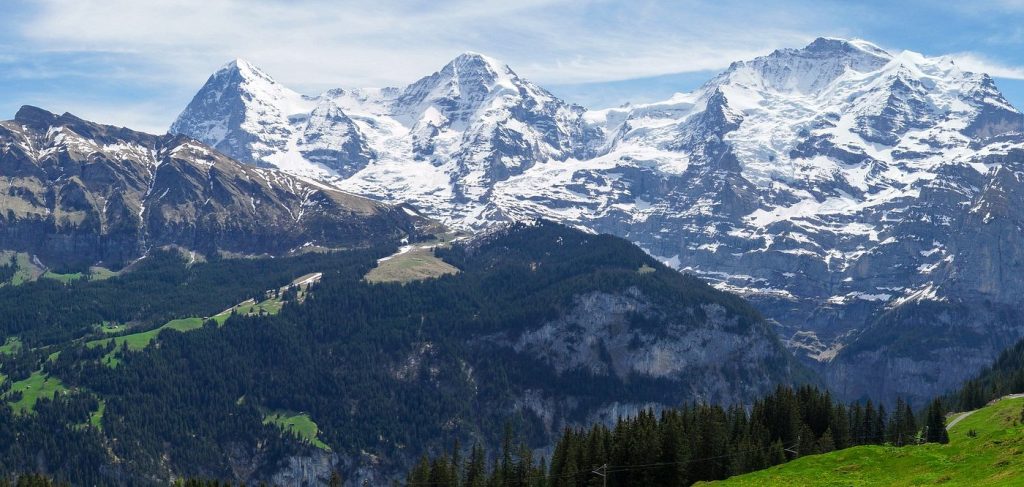
- Jungfrau: The Jungfrau mountain, at 4,158 meters, is known for its proximity to the Jungfraujoch, the highest railway station in Europe.
- Mont Blanc: While technically located in France, Mont Blanc is part of the western Swiss Alps and, at 4,808 meters, is the highest peak in the Alps.
- Dufourspitze: Located in the Monte Rosa massif, this peak, which reaches 4,634 meters, is the highest point in Switzerland.
2. Natural Beauty and Ecosystems of the Swiss Alps
2.1. Alpine Flora and Fauna
The Swiss Alps are home to a unique range of ecosystems that support a variety of plant and animal species. These ecosystems shift with altitude, from lush meadows and forests at lower elevations to barren, rocky terrain and glaciers at higher altitudes.
- Flora: At lower altitudes, the Alps feature expansive forests of pine, fir, and spruce. As you ascend, alpine meadows come to life with flowers such as edelweiss, gentians, and alpine roses. At the highest elevations, vegetation is sparse due to the harsh environment.
- Fauna: The Swiss Alps are home to a variety of wildlife, including iconic species such as the Ibex (a wild goat), Alpine chamois, marmots, and golden eagles. The region is also known for its large populations of snow leopards and brown bears, though sightings are rare.
2.2. Glaciers and Icefields
The Swiss Alps are also home to some of Europe’s largest glaciers. These glaciers are a vital part of the region’s hydrology, feeding rivers that supply water to the Swiss and surrounding regions. Some of the most notable glaciers include:
- Aletsch Glacier: At 23 kilometers in length, the Aletsch Glacier is the largest glacier in the Alps and a UNESCO World Heritage Site. It is an awe-inspiring sight, stretching across the Jungfrau-Aletsch region.
- Gorner Glacier: Located near the Matterhorn, the Gorner Glacier is one of the longest glaciers in the Alps, offering visitors stunning views of the surrounding peaks and valleys.
3. Tourism and Recreation in the Swiss Alps
3.1. Skiing and Snowboarding: The Winter Playground
The Swiss Alps are world-renowned for their winter sports opportunities. With its snow-covered peaks and expansive ski resorts, the region draws thousands of skiers, snowboarders, and mountain enthusiasts each year.
- Zermatt: Home to the iconic Matterhorn, Zermatt is one of the premier skiing destinations in the world, offering an extensive network of slopes for all levels of skiers and snowboarders.
- St. Moritz: Known for hosting the Winter Olympics twice, St. Moritz is famous for its luxurious resorts and high-end clientele.
- Verbier: This resort is popular with adventurous skiers and snowboarders, offering challenging slopes and a vibrant après-ski scene.
3.2. Hiking and Mountaineering: Exploring the Alpine Beauty
Beyond skiing, the Swiss Alps offer a wealth of hiking and mountaineering opportunities, catering to adventurers and nature lovers alike. The region boasts an extensive network of trails that traverse glacial valleys, snow-capped peaks, and quaint mountain villages.
- The Haute Route: One of the most famous hikes in the Alps, the Haute Route connects Chamonix in France to Zermatt in Switzerland, covering a distance of around 180 kilometers through some of the most stunning landscapes in the Alps.
- Jungfrau Region: The Jungfrau region offers a variety of hiking trails, including the Eiger Trail, which offers spectacular views of the Eiger, Mönch, and Jungfrau mountains.
For those seeking a more challenging adventure, the Swiss Alps offer some of the best mountaineering in the world. Peaks such as Matterhorn and Dufourspitze are some of the most sought-after climbing destinations in the world.
4. Cultural Significance of the Swiss Alps
4.1. Alpine Culture and Traditions
The Swiss Alps are not just a place for outdoor activities—they are also a rich repository of cultural history. The Alpine region has its own unique traditions, architecture, and way of life.
- Alpine Villages: The Swiss Alps are home to charming villages that have preserved their traditional Alpine architecture, with wooden chalets and narrow winding streets. Grindelwald, Wengen, and Mürren are just a few examples of picturesque Swiss Alpine villages.
- Swiss Alpine Music: The alphorn and yodeling are iconic musical traditions of the region, and many festivals celebrate these cultural expressions, bringing together locals and visitors to enjoy the music, dance, and food of the Alps.
- Cheese and Fondue: The Alps are also known for their culinary traditions, particularly the making of cheese. The famous Swiss fondue is a beloved dish that has become synonymous with Alpine dining.
4.2. The Role of the Swiss Alps in Swiss Identity
The Swiss Alps play a central role in the identity of Switzerland. The mountains have shaped the country’s culture, economy, and even politics. The Swiss have a deep connection to their mountains, as they have historically served as a symbol of strength, independence, and resilience. The Alps have also served as a natural barrier, providing protection and contributing to the country’s neutrality during conflicts in Europe.
5. Conservation and Environmental Challenges
5.1. The Impact of Climate Change
The Swiss Alps are not immune to the challenges posed by climate change. Rising temperatures have caused the glaciers to shrink, resulting in a loss of ice and changes to the landscape. The Aletsch Glacier and many others have significantly retreated in recent decades.
- Glacier Loss: Glaciers in the Alps are retreating at an alarming rate, with many of them expected to be significantly reduced in size by the end of the century.
- Changing Ecosystems: As the climate warms, there is a shift in the flora and fauna of the Alps. Alpine species are at risk, while new species are moving in from lower altitudes.
5.2. Efforts to Protect the Swiss Alps
In response to these threats, Switzerland has implemented various conservation strategies to protect the Alps and mitigate the effects of climate change. Efforts include:
- Sustainable Tourism: Encouraging eco-friendly tourism practices to reduce the impact of visitors on the environment.
- Protected Areas: Several areas of the Swiss Alps, such as the Swiss National Park, are designated as protected zones to conserve biodiversity and prevent overdevelopment.
6. Conclusion: Preserving the Swiss Alps for Future Generations
The Swiss Alps are one of the most iconic and beautiful natural landscapes in the world. With their breathtaking peaks, lush valleys, and rich cultural heritage, the Alps represent the very essence of Switzerland. As both a tourist destination and a symbol of national pride, the Swiss Alps continue to inspire awe and reverence from visitors around the globe.
However, it is crucial to remember that these natural wonders face numerous challenges, particularly due to the impacts of climate change. As travelers and stewards of the planet, it is our responsibility to ensure that the Swiss Alps remain protected and preserved for future generations to enjoy. Through sustainable tourism and environmental conservation, we can help maintain the majesty of the Swiss Alps while fostering a deeper appreciation for the planet’s natural heritage.