





Introduction
Nestled in the heart of the Yucatán Peninsula in Mexico lies one of the most remarkable and significant archaeological sites in the world: Chichen Itza. A testament to the brilliance of the ancient Mayan civilization, this archaeological wonder has captivated historians, archaeologists, and tourists alike for centuries. As one of the New Seven Wonders of the World, Chichen Itza continues to be an icon of Mexico’s rich history and culture, attracting millions of visitors every year who come to admire its architectural wonders and learn about the society that built it.
The site of Chichen Itza was once a thriving city-state, home to a vast, sophisticated culture that flourished between the 7th and 10th centuries CE. Today, it serves as a window into the Mayan civilization, offering valuable insights into their achievements in astronomy, engineering, mathematics, and art.
In this article, we will delve into the history, architecture, and cultural significance of Chichen Itza, uncovering the mysteries of this ancient city and exploring the lasting legacy of its people. From the majestic El Castillo pyramid to the sacred cenote, every corner of this site tells a story that has endured for over a millennium.
1. The History of Chichen Itza
1.1 The Rise of the Mayan Civilization
The history of Chichen Itza begins with the rise of the Mayan civilization, one of the most advanced and influential cultures in pre-Columbian Mesoamerica. The Maya civilization reached its peak during the Classic Period (250-900 CE) and was spread across present-day Mexico, Guatemala, Belize, and parts of Honduras and El Salvador. Known for their achievements in architecture, astronomy, and mathematics, the Maya developed a complex and highly organized society that was built around large ceremonial centers.
Chichen Itza emerged as one of the most important and powerful cities in the Mayan world. By the time it reached its peak in the 9th century, it had grown into a metropolitan center with a population of tens of thousands of people. It was not only a political and economic hub but also a religious center with deep ties to the cosmos.
1.2 The Collapse and Rediscovery
Around the end of the 10th century, Chichen Itza saw a significant decline, and by the 12th century, the city had been largely abandoned. The reasons for its collapse remain unclear, but theories suggest that a combination of environmental factors, such as prolonged drought, along with internal conflict, may have contributed to the downfall.
For centuries, Chichen Itza remained hidden beneath the dense jungle of the Yucatán Peninsula. The site was rediscovered in the early 19th century by explorers and archaeologists, and since then, it has become one of the most studied and visited archaeological sites in the world. It was designated as a UNESCO World Heritage Site in 1988 and continues to be a major point of interest for tourists and researchers alike.
2. The Architecture of Chichen Itza: A Masterpiece of Mayan Engineering
Chichen Itza is renowned for its extraordinary architecture, which showcases the Mayans’ advanced knowledge of engineering, mathematics, and astronomy. The city is home to numerous temples, pyramids, courts, and palaces, each serving different purposes within the Mayan society. The layout and design of these structures reveal the Maya’s deep understanding of geometry and cosmology, as well as their sophisticated urban planning.
2.1 El Castillo (The Temple of Kukulkan)
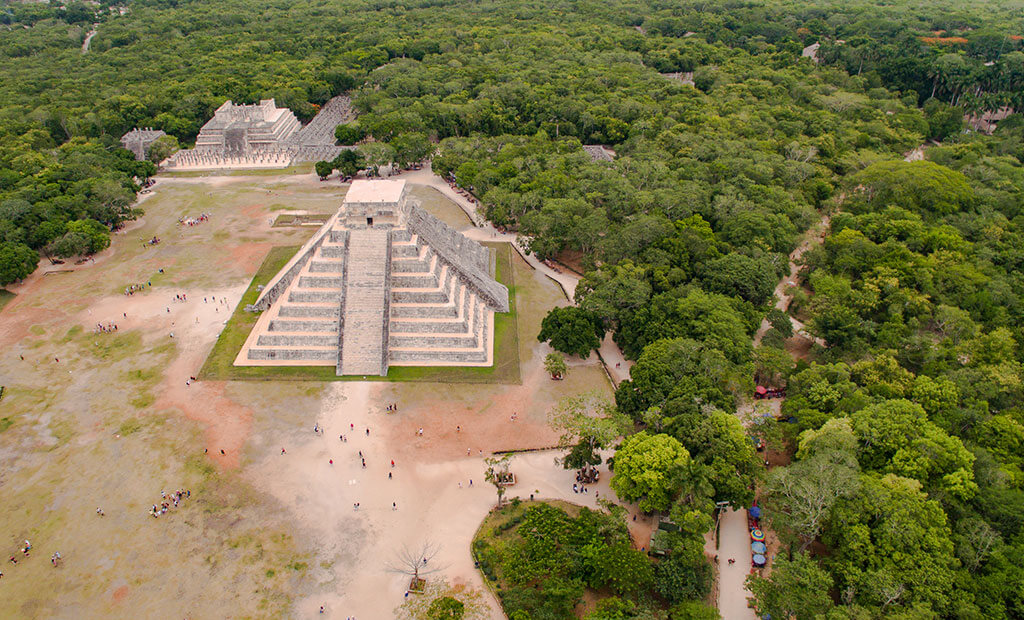
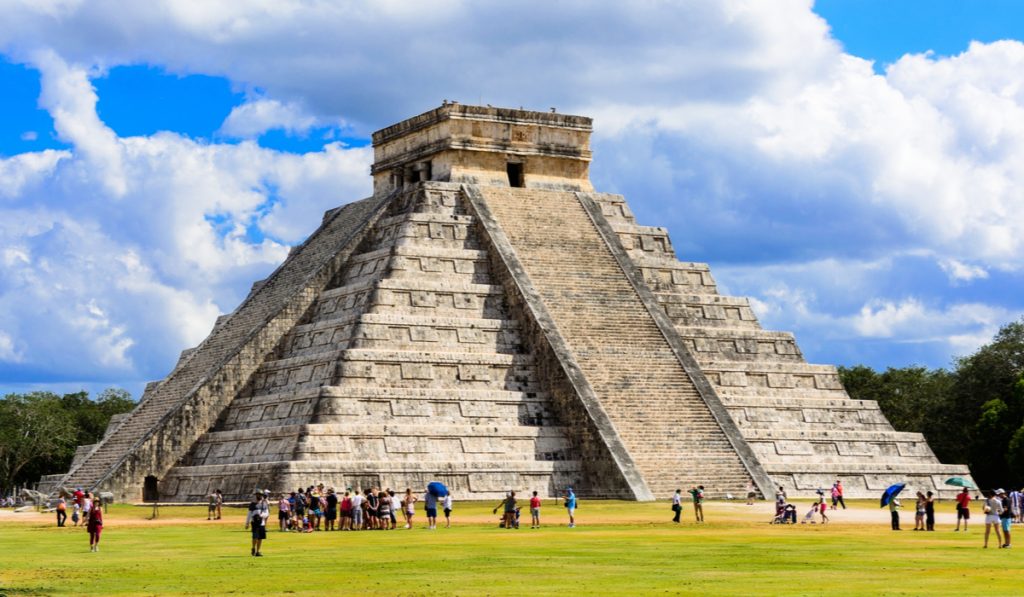
One of the most iconic structures at Chichen Itza is El Castillo, also known as the Temple of Kukulkan. This massive pyramid stands at 24 meters (79 feet) tall and consists of a series of nine terraces, each representing a step in the Mayan underworld. At the top of the pyramid sits a temple dedicated to Kukulkan, the feathered serpent god, who was central to Mayan religion and mythology.
El Castillo is famous for the equinox phenomenon that occurs twice a year—on the spring and autumn equinoxes. During this time, the setting sun casts a series of shadows along the pyramid’s northern staircase, creating the illusion of a serpent descending the steps. This phenomenon was a demonstration of the Maya’s mastery of astronomy and their ability to align their architecture with the celestial movements.
2.2 The Great Ball Court
Another significant feature of Chichen Itza is the Great Ball Court, the largest and most impressive ball court ever discovered in the ancient Americas. The court measures 168 meters (550 feet) long and is bordered by two high walls adorned with carved stone rings. The ball game played here, known as pitz, was not just a sport—it held ritualistic and political significance, with games often serving as a way to resolve conflicts or as offerings to the gods.
The ball game was played with a rubber ball, and the objective was to get the ball through a high stone ring using only the hips, elbows, and knees. The game was often symbolic, representing the struggle between day and night, and sometimes the losing team was sacrificed to honor the gods. The Great Ball Court is not only an architectural marvel but also a reminder of the religious and political importance of sports in Mayan society.
2.3 The Cenote Sagrado (Sacred Cenote)
One of the most striking features of Chichen Itza is the Cenote Sagrado, a large natural sinkhole that was used by the Maya for ritual sacrifices. This deep, water-filled cavern was believed to be the gateway to the underworld and was used as a site for offerings to the gods, especially Chac, the rain god.
Archaeological excavations have uncovered numerous human remains and valuable artifacts in the cenote, suggesting that the Maya offered both precious items and human sacrifices to ensure the prosperity of their civilization. Today, the cenote is a peaceful and beautiful location, but it serves as a reminder of the deeply spiritual and ritualistic practices of the Maya.
2.4 The Temple of the Warriors and The Group of a Thousand Columns
Another prominent structure in Chichen Itza is the Temple of the Warriors, a large pyramid-like structure surrounded by a courtyard and a series of columns. The temple is dedicated to the Mayan god of war, and its walls are adorned with reliefs depicting warriors, jaguars, and eagles—symbols of strength and power.
Adjacent to the Temple of the Warriors is the Group of a Thousand Columns, a vast area filled with stone columns that once supported a roof. These columns were part of a large ceremonial complex that was likely used for administrative and religious purposes. The intricate carvings on the columns represent various deities, animals, and mythological scenes, providing valuable insight into Mayan art and iconography.
3. The Role of Chichen Itza in Mayan Society
3.1 Political and Economic Hub
Chichen Itza was not only a religious and ceremonial center but also a political and economic hub. At its height, the city was the most powerful in the Yucatán Peninsula, and it played a crucial role in controlling trade and alliances between different Mayan city-states. The city’s strategic location near the Mayan lowlands and coastal trade routes allowed it to dominate the region’s political and economic affairs.
The elite class of Chichen Itza, including the priests and nobles, likely controlled access to vital resources such as obsidian, jade, and cacao. These resources were essential for trade and were often used in religious rituals. The city’s wealth and power were also reflected in its monumental architecture, which served as both a symbol of the elite’s power and a means of consolidating control over the surrounding area.
3.2 Cultural and Religious Center
Chichen Itza was a cultural and religious center where various forms of art, knowledge, and rituals were developed and practiced. The city was home to a vibrant and sophisticated culture that celebrated the natural world, the cosmos, and the gods. The Mayan calendar, which was one of the most advanced timekeeping systems of the ancient world, was used to mark significant events, agricultural cycles, and religious ceremonies.
The Maya were also known for their intricate astronomical observations and advanced understanding of the stars, planets, and constellations. Chichen Itza’s architecture and urban design reflect the Maya’s belief in the relationship between the natural world and their religious practices, as seen in the alignment of El Castillo with the solar cycles.
4. Chichen Itza Today: A UNESCO World Heritage Site
4.1 Preserving the Legacy of Chichen Itza
Today, Chichen Itza stands as a UNESCO World Heritage Site and is one of the most visited archaeological sites in the world. Efforts are underway to preserve the site’s structures and cultural significance for future generations. These efforts include restoration projects, site management, and the protection of the surrounding natural environment.
Chichen Itza remains a powerful symbol of the achievements of the Mayan civilization and continues to inspire curiosity and admiration in all who visit. Whether standing at the foot of the El Castillo pyramid or gazing into the depths of the Sacred Cenote, visitors are transported back in time to a world of ancient rituals, architectural wonders, and scientific discoveries.
Conclusion
Chichen Itza is not just a tourist attraction—it is a living testament to the ingenuity, spirituality, and resilience of the ancient Mayan civilization. From its remarkable architecture to its rich cultural heritage, the site continues to offer insights into the lives of the people who once called it home.
As visitors from around the world flock to Chichen Itza, they are reminded of the importance of preserving the cultural heritage of humanity’s past. By understanding and respecting the achievements of ancient civilizations like the Maya, we ensure that their legacies endure for generations to come.