





Introduction: A Structural Shift in the Way We Travel
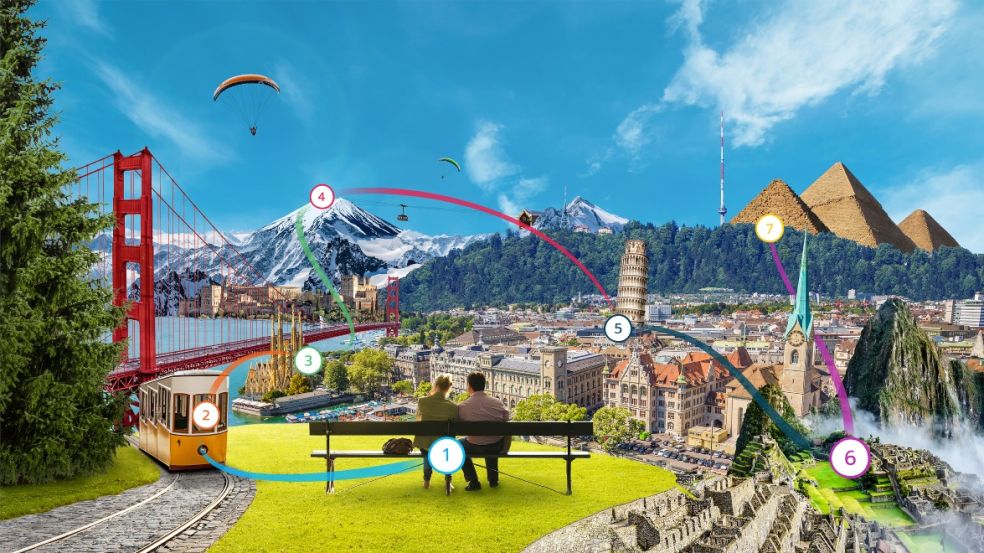
Over the past two decades, global tourism has undergone a profound transformation. Travel is no longer defined solely by short visits to iconic landmarks or checklist-style itineraries. Instead, two complementary trends have risen to prominence: multi-city travel, which emphasizes breadth and interconnected urban exploration, and deep travel, which prioritizes immersion, duration, and meaningful engagement with local life. Together, these modes signal a structural shift in how individuals conceptualize movement, leisure, culture, and identity in a globalized world.
This evolution is driven by multiple forces: technological advancements, changing socioeconomic conditions, generational value shifts, and the maturation of global travel infrastructure. Travelers today are not merely tourists; they are temporary residents, cultural observers, remote workers, and experiential learners. This article provides a comprehensive and professional analysis of the rise of multi-city travel and deep travel, examining their definitions, drivers, typologies, benefits, challenges, and future trajectories.
1. Defining the Concepts: Breadth and Depth in Modern Tourism
1.1 What Is Multi-City Travel?
Multi-city travel refers to itineraries that include three or more cities or regions within a single journey, often linked by thematic, geographic, or logistical coherence. Unlike traditional point-to-point tourism, multi-city travel emphasizes connectivity—between cities, cultures, histories, and transportation networks.
Examples include:
- A European itinerary spanning Paris, Brussels, Amsterdam, and Berlin
- A Southeast Asian route connecting Bangkok, Chiang Mai, Luang Prabang, and Hanoi
- A domestic journey linking multiple metropolitan and secondary cities
Multi-city travel reflects a desire to understand regional diversity rather than isolated destinations.
1.2 What Is Deep Travel?
Deep travel—also referred to as slow travel or immersive travel—prioritizes time, context, and engagement over quantity. Travelers spend extended periods in one location, often weeks or months, seeking to understand daily life, local customs, language, food systems, and social rhythms.
Key characteristics include:
- Longer stays in fewer places
- Participation in local routines rather than tourist circuits
- Emphasis on learning, reflection, and cultural exchange
While multi-city travel focuses on spatial expansion, deep travel emphasizes experiential depth.
1.3 Complementary, Not Contradictory
Importantly, these two models are not opposites. Many contemporary itineraries combine both: travelers move across several cities while practicing deep engagement in each stop. This hybridization reflects the increasing sophistication of traveler preferences.
2. Historical Context: From Mass Tourism to Experiential Mobility
2.1 The Era of Mass Tourism
Post–World War II tourism was shaped by:
- Package tours
- Standardized hotels
- Short stays
- Icon-focused sightseeing
This model prioritized efficiency and accessibility, catering to limited vacation time and predictable consumer expectations.
2.2 The Experience Economy and Individualization
By the late 20th century, rising incomes, increased leisure time, and cultural globalization began reshaping tourism. Travelers sought:
- Authenticity over spectacle
- Personal narratives over standardized experiences
- Emotional and intellectual value
Multi-city and deep travel emerged as responses to these evolving desires.
2.3 The Digital Acceleration
Online booking platforms, real-time navigation, peer-to-peer accommodation, and social media have dramatically lowered the cognitive and logistical barriers to complex travel. Planning a multi-city route or living abroad temporarily is now feasible for a broad demographic.
3. Drivers Behind the Rise of Multi-City Travel
3.1 Transportation Infrastructure and Connectivity
High-speed rail networks, budget airlines, and improved intercity logistics have made city-hopping faster, cheaper, and more reliable. Travelers can move seamlessly between urban centers without sacrificing comfort or time.
3.2 Urban Clustering and Regional Identity
Many regions market themselves as networks of cities rather than single destinations. Examples include:
- The Benelux region
- Japan’s Golden Route
- China’s city clusters
- The U.S. East Coast corridor
Multi-city travel aligns with how economies and cultures are spatially organized.
3.3 Curiosity for Contrast and Comparison
Travelers increasingly value comparison:
- Old capital vs. modern metropolis
- Coastal city vs. inland town
- Political center vs. cultural hub
Multi-city itineraries allow travelers to contextualize experiences through contrast.
4. Drivers Behind the Rise of Deep Travel
4.1 Value Shifts: Meaning Over Movement
Modern travelers—particularly younger generations—often prioritize:
- Personal growth
- Cultural understanding
- Mental well-being
Deep travel offers time for reflection and emotional resonance that rapid travel often lacks.
4.2 Remote Work and Location Independence
The rise of remote work has decoupled income from geography. Travelers can now:
- Stay longer without financial interruption
- Integrate work and exploration
- Choose destinations based on lifestyle quality
This has significantly expanded the feasibility of deep travel.
4.3 Reaction Against Overtourism
Crowded attractions, environmental degradation, and superficial experiences have generated fatigue. Deep travel is often framed as a more ethical and sustainable alternative, distributing time and resources more evenly.
5. Typologies of Multi-City Travel
5.1 Thematic Multi-City Travel
Cities are linked by a shared theme:
- Art and museums
- Culinary traditions
- Architectural styles
- Historical periods
This approach turns travel into a curated intellectual journey.
5.2 Linear and Circular Routes
- Linear routes follow geography (north to south, coast to inland).
- Circular routes begin and end in the same city, maximizing efficiency.
5.3 Hub-and-Spoke Models
Travelers establish a base city and explore surrounding urban centers, blending stability with variety.
6. Typologies of Deep Travel
6.1 Cultural Immersion Travel
Focuses on:
- Language learning
- Traditional crafts
- Religious or community practices
Travelers often engage with local mentors or institutions.
6.2 Lifestyle-Based Deep Travel
Centers on daily life:
- Markets, gyms, cafes
- Neighborhood routines
- Long-term rentals
This model emphasizes living rather than visiting.
6.3 Skill- and Purpose-Oriented Travel
Examples include:
- Culinary apprenticeships
- Writing retreats
- Environmental research
- Volunteering (ethically managed)
Travel becomes a vehicle for skill acquisition or contribution.
7. Benefits of Multi-City and Deep Travel
7.1 Cognitive and Cultural Benefits
- Enhanced cultural literacy
- Greater tolerance for ambiguity
- Improved cross-cultural communication
7.2 Economic and Social Impact
- Broader distribution of tourism revenue
- Support for small businesses
- Reduced pressure on single hotspots
7.3 Personal Development
Travelers report:
- Stronger sense of self
- Increased adaptability
- Long-term memory formation
Depth and diversity reinforce learning and emotional impact.
8. Challenges and Limitations
8.1 Planning Complexity
Multi-city travel requires:
- Careful logistics
- Time management
- Contingency planning
Without proper pacing, it risks fatigue.
8.2 Emotional and Cognitive Load
Deep travel can involve:
- Cultural friction
- Loneliness
- Identity dislocation
These challenges require emotional resilience.
8.3 Environmental Considerations
While deep travel often reduces movement, multi-city travel can increase transportation emissions if poorly planned. Responsible choices are essential.
9. The Role of Technology and Platforms
Digital tools have become enablers rather than distractions:
- Mapping and itinerary optimization
- Language translation
- Community-based recommendations
- Long-term accommodation platforms
Technology supports autonomy while reducing uncertainty.
10. The Future of Travel: Toward Intentional Mobility
10.1 Hybrid Models Will Dominate
Future travel will likely blend:
- Multi-city exploration
- Periods of deep stay
- Flexible timelines
Rigid categories will dissolve in favor of intentional mobility.
10.2 Policy and Urban Response
Cities are adapting through:
- Digital nomad visas
- Infrastructure for long-stay visitors
- Cultural integration programs
Tourism policy increasingly recognizes travelers as temporary citizens.
10.3 Redefining Success in Travel
Success will be measured less by distance covered and more by:
- Relationships formed
- Knowledge gained
- Mutual respect achieved
Conclusion: From Movement to Meaning
The rise of multi-city travel and deep travel reflects a broader cultural transformation. In an era defined by mobility, information abundance, and global interconnectedness, travel has evolved from consumption to participation. Travelers no longer seek only to see the world—they seek to understand it, compare it, and belong within it, even temporarily.
Multi-city travel satisfies curiosity for scale and diversity; deep travel fulfills the human need for connection and comprehension. Together, they represent a mature, reflective form of tourism—one that acknowledges complexity, values time, and respects place.
As the global travel landscape continues to evolve, these modes will not fade. Instead, they will shape a future where travel is not faster or farther, but richer, more responsible, and more human.