




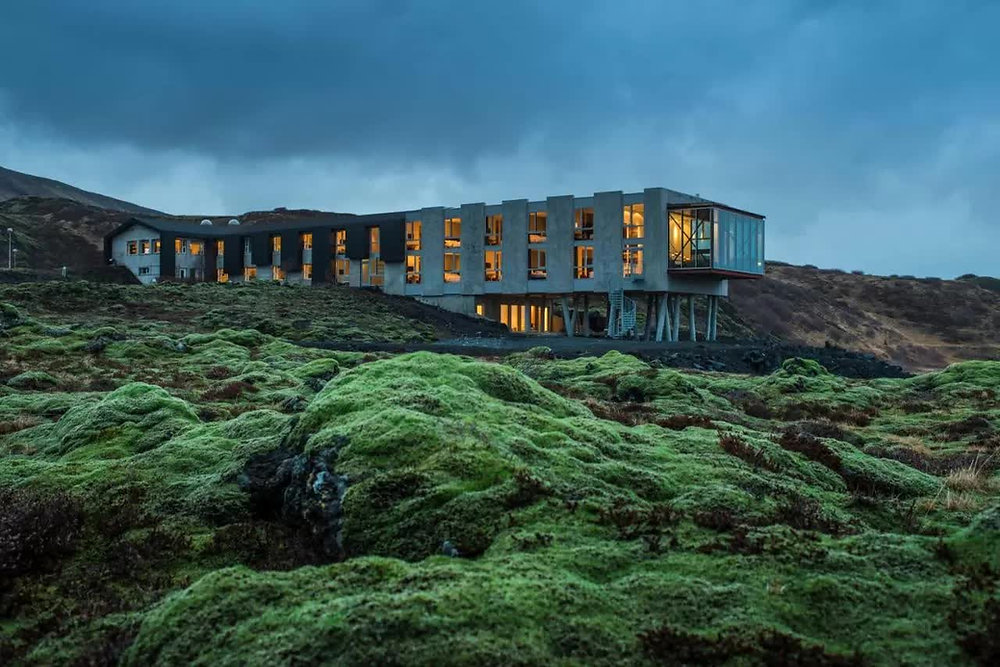

Iceland, with its dramatic landscapes of glaciers, volcanoes, geysers, and geothermal springs, is a global leader in sustainable tourism. As travelers increasingly seek environmentally responsible accommodations, eco-friendly hotels in Iceland offer luxury, comfort, and sustainability in harmony with nature. These lodgings not only reduce environmental impact but also provide immersive experiences that connect visitors with the island’s unique ecology and culture.
This article explores Iceland’s eco-friendly hotel sector in detail, covering sustainability principles, energy and water management, architectural innovations, cultural integration, notable hotels, challenges, and future trends in green hospitality.
1. The Rise of Eco-Friendly Tourism in Iceland
Tourism in Iceland has grown exponentially over the past decade, with millions of visitors drawn to its stunning natural beauty. This growth has prompted both government and private sectors to prioritize sustainability.
1.1 Sustainable Tourism Principles
- Environmental Conservation: Minimizing energy use, water consumption, and waste generation.
- Cultural Respect: Integrating local traditions and supporting communities.
- Economic Responsibility: Encouraging local sourcing and fair employment practices.
- Visitor Education: Promoting awareness of environmental stewardship.
1.2 Government Initiatives
- Iceland’s Ministry of Environment and Tourism promotes eco-certification programs for hotels.
- Incentives for renewable energy use, geothermal heating, and sustainable construction encourage industry-wide adoption.
2. Core Principles of Eco-Friendly Hotels
Eco-friendly hotels in Iceland operate on several key sustainability principles:
2.1 Energy Efficiency
- Use of geothermal energy for heating and electricity.
- Solar panels in summer months to supplement energy needs.
- LED lighting, motion sensors, and energy-efficient appliances.
2.2 Water Conservation
- Low-flow faucets, dual-flush toilets, and rainwater recycling.
- Greywater treatment for landscaping and geothermal pools.
- Guests are often educated on minimizing water usage.
2.3 Waste Reduction
- Comprehensive recycling programs and composting systems.
- Minimizing single-use plastics and providing refillable amenities.
- Collaboration with local suppliers to reduce packaging and food waste.
2.4 Sustainable Materials and Design
- Locally sourced wood, stone, and natural insulation materials.
- Minimalist designs that harmonize with the surrounding landscape.
- Incorporation of green roofs and natural ventilation systems.
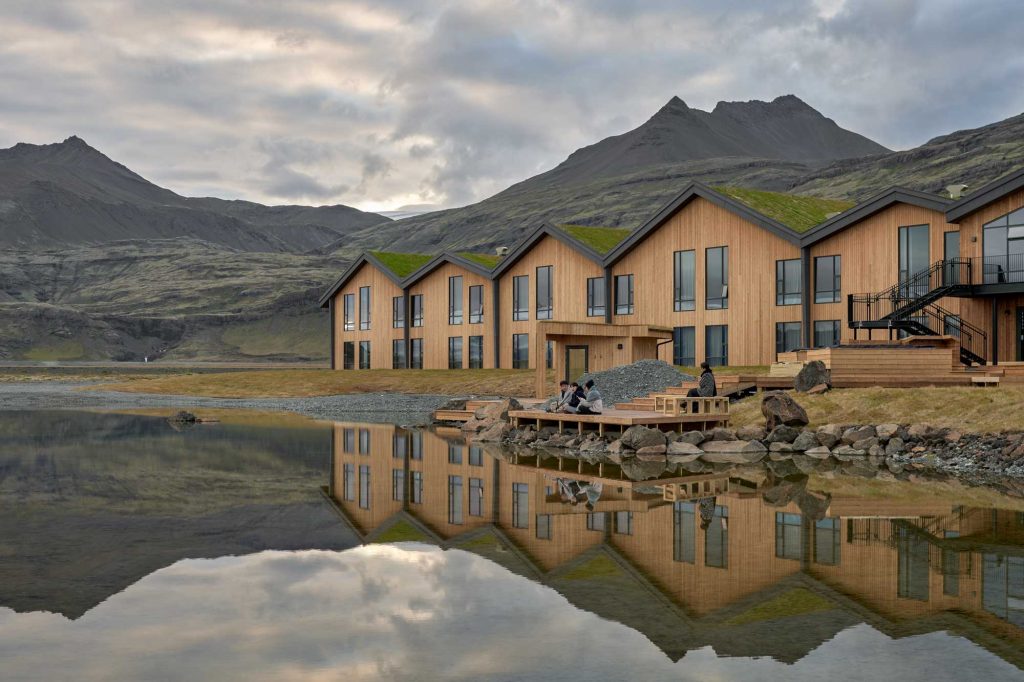
3. Architectural Innovation and Integration with Nature
Eco-friendly hotels in Iceland emphasize architectural designs that blend with the environment:
- Geothermal Lodges: Structures built near geothermal areas to harness natural heat.
- Earth-Sheltered Buildings: Lodges partially buried in hillsides reduce heating needs and environmental footprint.
- Panoramic Views: Large windows maximize natural light and connect guests with the landscape.
- Low Impact Landscaping: Native vegetation and careful site planning preserve local ecology.
4. Cultural and Community Engagement
Sustainable hotels often integrate Icelandic culture into the guest experience:
- Showcasing local art, handicrafts, and culinary traditions.
- Offering tours guided by local communities, such as fishing villages or geothermal farms.
- Supporting local employment, from chefs to maintenance staff.
- Participation in cultural festivals or eco-workshops for visitors.
5. Notable Eco-Friendly Hotels in Iceland
5.1 Ion Adventure Hotel, Nesjavellir
- Location: Near Þingvellir National Park
- Sustainability Features: Geothermal energy, minimalist design, and low-impact architecture
- Experience: Offers hiking, Northern Lights viewing, and eco-conscious luxury
5.2 Hotel Rangá, Hella
- Sustainability Focus: Energy-efficient heating, local sourcing, and waste reduction
- Highlights: Northern Lights observatory, river views, and locally inspired cuisine
5.3 The Retreat at Blue Lagoon, Grindavík
- Eco Features: Uses Blue Lagoon’s geothermal water for energy and wellness treatments
- Unique Experience: Luxurious spa, volcanic landscapes, and cultural immersion
5.4 Hótel Búðir, Snæfellsnes Peninsula
- Sustainable Practices: Geothermal heating, solar power, and community-supported operations
- Cultural Integration: Combines luxury accommodation with Icelandic art, cuisine, and traditions
5.5 101 Hotel, Reykjavik
- Urban Eco-Friendly Approach: Energy-efficient systems and locally sourced furnishings
- Cultural Experience: Contemporary design meets Icelandic artistic heritage
6. Guest Experiences and Activities
Eco-friendly hotels in Iceland offer immersive experiences that promote sustainability:
6.1 Geothermal Spa and Wellness
- Thermal pools, natural hot springs, and spa treatments using local minerals.
- Wellness programs often emphasize environmental awareness.
6.2 Outdoor Adventure and Nature Tours
- Guided hikes, glacier walks, volcano excursions, and whale watching with minimal environmental impact.
- Focus on wildlife conservation and responsible interaction with ecosystems.
6.3 Culinary Tourism
- Farm-to-table dining featuring organic, locally sourced ingredients.
- Cooking classes and tasting sessions promote Icelandic food traditions.
6.4 Cultural Workshops
- Guest participation in handicrafts, music, and storytelling preserves cultural heritage.
- Educational programs highlight the importance of environmental stewardship.
7. Economic and Social Impact
7.1 Economic Contributions
- Supports local businesses, artisans, and food producers.
- Provides employment in remote areas, promoting regional development.
- Eco-certification attracts premium clientele, boosting tourism revenues.
7.2 Social Benefits
- Strengthens community identity and pride in cultural and natural heritage.
- Encourages intergenerational knowledge transfer through tourism and workshops.
7.3 Environmental Stewardship
- Hotels actively contribute to biodiversity preservation, sustainable energy usage, and waste reduction.
- Educating guests creates broader environmental awareness.
8. Challenges Facing Eco-Friendly Hotels
Despite their successes, eco-friendly hotels encounter several challenges:
8.1 Climate and Environmental Constraints
- Harsh Icelandic weather requires robust building design and energy management.
- Volcanic activity and glacial melting pose natural hazards affecting infrastructure.
8.2 Cost and Investment
- High upfront costs for geothermal systems, eco-certification, and sustainable construction.
- Return on investment may be slow, requiring long-term commitment to sustainability.
8.3 Balancing Luxury and Sustainability
- Maintaining luxury experiences while adhering to strict environmental standards.
- Guest expectations for comfort sometimes conflict with sustainable practices, e.g., frequent linen changes.
8.4 Seasonality
- Tourism peaks in summer and winter (Northern Lights), creating resource management challenges.
9. Future Trends in Eco-Friendly Hospitality in Iceland
9.1 Smart and Green Technologies
- Integration of IoT, smart thermostats, and energy management systems for efficient operations.
- Use of AI and data analytics to optimize energy and water usage.
9.2 Regenerative Tourism
- Moving beyond sustainability to restore and enhance ecosystems, e.g., reforestation and habitat preservation.
- Partnerships with conservation organizations to contribute positively to local ecology.
9.3 Cultural Sustainability
- Emphasis on authentic Icelandic experiences, including heritage preservation and community engagement.
9.4 Global Recognition and Certification
- Expansion of green certification programs to standardize eco-friendly practices.
- Hotels aim for international awards, attracting eco-conscious travelers worldwide.
10. Practical Recommendations for Travelers
- Choose Certified Eco-Hotels: Look for recognized sustainability certifications such as Green Globe or Nordic Swan Ecolabel.
- Minimize Footprint: Reduce water usage, reuse towels, and avoid single-use plastics.
- Participate in Eco-Activities: Engage in guided hikes, farm visits, and conservation programs.
- Support Local Economy: Purchase souvenirs, crafts, and food directly from communities.
- Respect Nature: Follow guidelines for wildlife interaction, trail usage, and geothermal areas.
11. Conclusion
Eco-friendly hotels in Iceland demonstrate that luxury, comfort, and sustainability can coexist. By embracing geothermal energy, water conservation, waste reduction, sustainable materials, and cultural engagement, these accommodations provide unique, environmentally responsible travel experiences.
For travelers, staying in eco-hotels offers an immersive connection with Icelandic nature and culture, from geothermal spas to local culinary delights. For communities and the environment, it ensures long-term preservation of fragile ecosystems, supports local livelihoods, and promotes responsible tourism.
As global tourism evolves, Iceland’s eco-friendly hotel sector exemplifies how hospitality can lead the way in sustainability, innovation, and cultural preservation. Visitors are not just guests—they become partners in a shared mission to protect and celebrate one of the planet’s most spectacular natural landscapes.
Iceland’s eco-friendly hotels are more than accommodations—they are living examples of harmony between humans and nature, offering unforgettable experiences while championing environmental stewardship.