




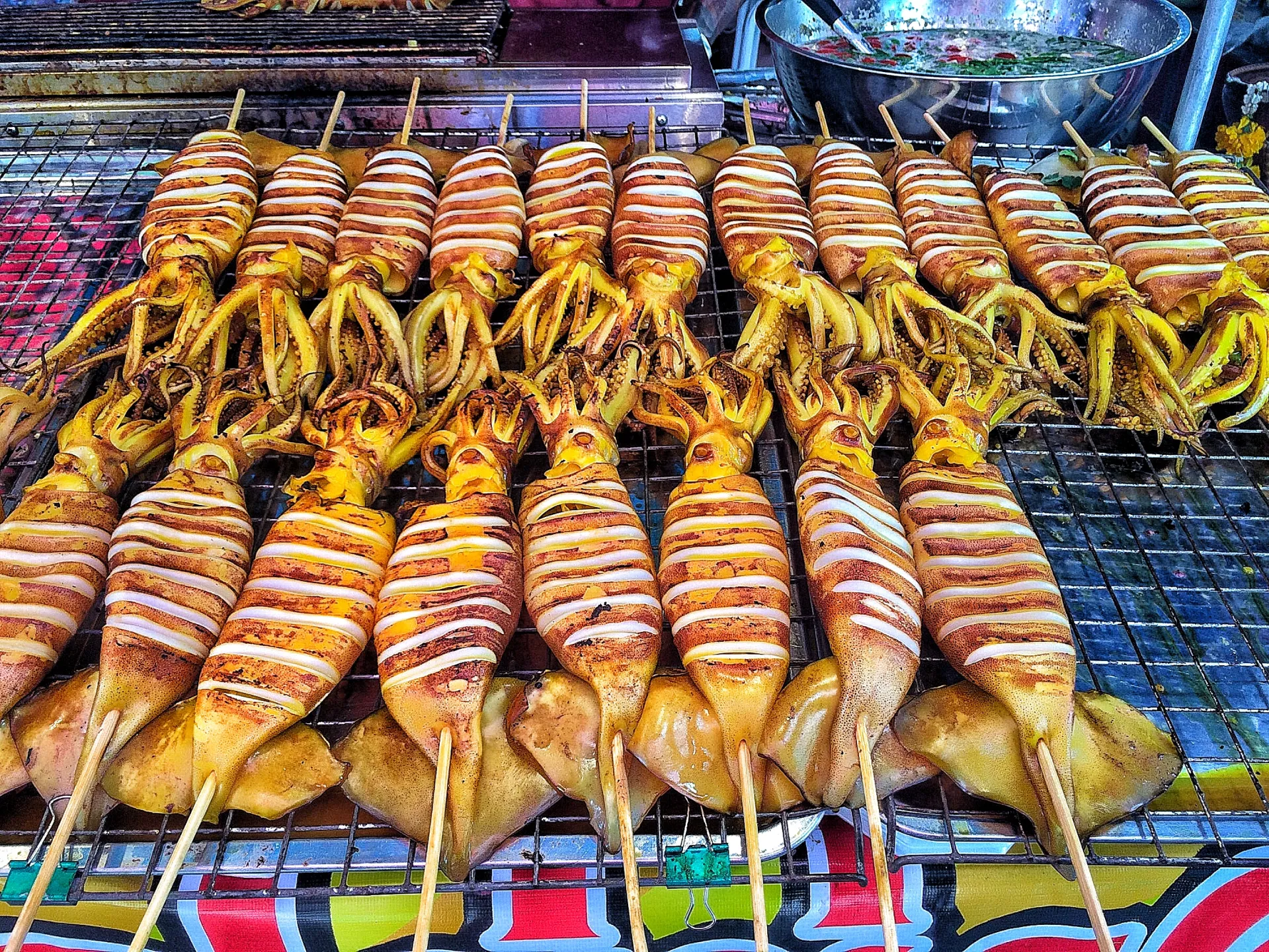

Introduction: The Living Theatre of Thai Streets
Thailand’s street food is not merely a culinary category; it is a living, breathing cultural system—one that hums with heat, motion, aroma, and human exchange. From dawn to deep night, the sidewalks of Bangkok, Chiang Mai, Phuket, and countless provincial towns transform into open-air kitchens where tradition meets improvisation. Woks flash, cleavers sing against wooden blocks, charcoal embers glow, and sauces—balanced with a near-scientific precision—coat noodles, rice, meats, and fruits. To understand Thailand through its street food is to read a palimpsest of history, geography, religion, migration, and modern urban life.
This article offers a professional, in-depth, and well-structured examination of Thai street food. We will trace its historical roots, analyze its core flavor architecture, catalog iconic dishes, explain regional variations, explore cooking techniques and ingredients, discuss hygiene and sustainability, and consider its global influence and future. While richly detailed, the aim is clarity and precision—an informed guide for readers who seek both cultural insight and culinary literacy.
1. Historical Foundations: How Street Food Became Thailand’s Culinary Backbone
1.1 Pre-Modern Roots and Waterways
Historically, Thailand (formerly Siam) was a water-based civilization. Rivers and canals functioned as roads, markets, and social hubs. Early “street food” was in fact boat food—vendors paddling with pots of noodles, curries, and sweets. This aquatic commerce shaped dishes that were fast to cook, easy to portion, and intensely flavored to remain appealing outdoors.
1.2 Chinese Influence and Urbanization
Large-scale Chinese immigration from the 18th to early 20th centuries left a profound imprint. Stir-frying, wheat noodles, soy sauce, tofu, and the wok itself entered Thai kitchens. As Bangkok urbanized, sidewalks replaced canals, and mobile vendors adapted seamlessly. Many of today’s classics—guay tiew (noodle soups), khao moo daeng (red pork on rice), and pad see ew—are Thai-Chinese hybrids.
1.3 Economic Realities and Social Structure
Street food thrived because it solved practical problems. Historically, many urban homes lacked full kitchens; buying prepared food was efficient and economical. Vendors offered affordable nutrition, while communities formed around familiar stalls. Even today, street food remains democratic—serving office workers, students, tourists, and taxi drivers alike.
2. The Architecture of Flavor: What Makes Thai Street Food Distinct
Thai cuisine is often summarized by its balance of sweet, sour, salty, bitter, and spicy. In street food, this balance is not theoretical—it is actively adjusted at the table.
2.1 Core Flavor Components
- Sweet: Palm sugar provides depth rather than simple sweetness.
- Sour: Lime juice, tamarind, and green mango cut through richness.
- Salty: Fish sauce (nam pla) and shrimp paste anchor umami.
- Spicy: Fresh chilies, dried chili flakes, and chili pastes vary in heat and aroma.
- Bitter/Astringent: Herbs like holy basil or raw vegetables add contrast.
2.2 Customization as a Cultural Practice
A hallmark of Thai street food is personalization. Condiment trays—vinegar with chilies, sugar, fish sauce, chili flakes—invite diners to become co-creators. This practice reflects a broader Thai value: harmony through balance, not uniformity.
3. Iconic Street Food Dishes: A Detailed Catalogue
3.1 Noodle-Based Classics
Pad Thai
Perhaps the most internationally recognized Thai dish, Pad Thai is a rice noodle stir-fry with tamarind, palm sugar, fish sauce, egg, tofu, dried shrimp, and peanuts. On the street, it is cooked à la minute over high heat, often wrapped in an omelet for textural contrast.
Guay Tiew (Noodle Soups)
A broad category rather than a single dish, guay tiew includes pork, beef, chicken, and seafood broths, served with rice or egg noodles. Street vendors distinguish themselves through broth clarity, bone ratios, and secret spice blends.
Pad See Ew and Pad Kee Mao
- Pad See Ew features wide rice noodles, dark soy sauce, Chinese broccoli, and a subtle sweetness.
- Pad Kee Mao (“drunken noodles”) is bolder, spicier, and heavy on holy basil.
3.2 Rice-Based Staples
Khao Moo Daeng
Sliced barbecued pork, crispy pork belly, Chinese sausage, and rice—finished with a glossy gravy and a soft-boiled egg. A testament to Thai-Chinese culinary synthesis.
Khao Man Gai
Poached chicken over fragrant rice cooked in chicken fat, served with a fermented soybean-chili sauce. Simple, nourishing, and ubiquitous.
Khao Pad (Fried Rice)
Fried rice with crab, shrimp, chicken, or pork, often garnished with cucumber and lime. Street versions emphasize wok hei—the smoky aroma from intense heat.
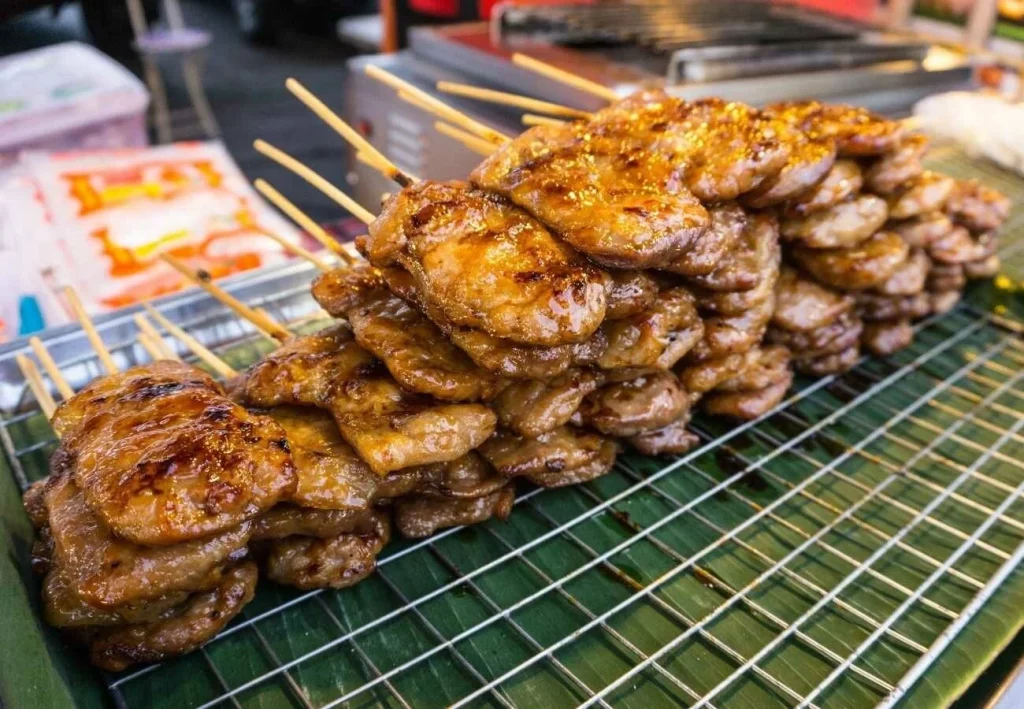
3.3 Grilled and Skewered Foods
Moo Ping
Marinated pork skewers grilled over charcoal, slightly sweet, smoky, and juicy. Often eaten for breakfast with sticky rice.
Gai Yang
Northeastern-style grilled chicken, marinated with garlic, coriander root, and fish sauce, then slow-grilled until crisp-skinned and tender.
Sai Krok Isan
Fermented pork sausage from Isan, grilled and served with cabbage, chilies, and ginger—an example of preservation techniques meeting street convenience.
3.4 Soups and Curries on the Street
Tom Yum
Hot and sour soup with lemongrass, galangal, kaffir lime leaves, and chilies. Street versions are lighter, sharper, and intensely aromatic.
Kaeng (Curries)
While many curries are home foods, street vendors often serve green curry, panang, or massaman over rice, adapted for quick service.
3.5 Snacks and Small Bites
Som Tam
Green papaya salad pounded to order in a mortar. Variations range from mild and sweet to fiercely spicy, especially in Isan-style versions.
Khanom Buang
Crispy crepes with sweet or savory fillings—an ancient snack with roots in royal cuisine.
Look Chin
Meatballs on skewers, grilled and brushed with sauce, popular with students and night market visitors.
3.6 Desserts and Sweet Treats
Mango Sticky Rice
Glutinous rice soaked in coconut milk, paired with ripe mango and coconut cream. Seasonal, iconic, and texturally precise.
Roti
Influenced by South Asian flatbreads, Thai roti is pan-fried until flaky, then topped with banana, condensed milk, or chocolate.
Khanom Krok
Coconut pancakes with crisp edges and custardy centers, cooked in cast-iron pans.
4. Regional Diversity: One Country, Many Street Food Identities
4.1 Central Thailand
Balanced flavors, refined techniques, and a heavy presence of noodle and rice dishes dominate Bangkok and surrounding provinces.
4.2 Northern Thailand (Lanna)
Milder spice, herbal depth, and dishes like khao soi (curried noodle soup) reflect Burmese and Yunnanese influences.
4.3 Northeastern Thailand (Isan)
Bold, spicy, sour, and fermented flavors. Sticky rice, grilled meats, som tam, and larb define Isan street food.
4.4 Southern Thailand
Spicier and more turmeric-forward, with strong Malay influences. Seafood and coconut-based dishes are prominent.
5. Ingredients and Techniques: The Professional Lens
5.1 Essential Ingredients
- Fish Sauce: Fermented anchovies, aged for umami depth.
- Chilies: From mild to fiery; fresh and dried varieties matter.
- Herbs: Lemongrass, galangal, kaffir lime leaves, holy basil.
- Rice and Noodles: Texture and grain selection are crucial.
5.2 Cooking Methods
- Wok Stir-Frying: High heat, speed, and timing.
- Charcoal Grilling: Adds smoke and caramelization.
- Pounding (Mortar & Pestle): Releases essential oils in herbs and spices.
- Simmering: For broths that are clear yet flavorful.
6. Hygiene, Regulation, and Modern Challenges
Thai street food has evolved under increasing regulatory scrutiny. Vendors today often wear gloves, maintain clean stations, and comply with municipal standards. Night markets are organized, waste management has improved, and food safety education is widespread. While challenges remain, professionalism is increasingly visible.
7. Street Food as Social Infrastructure
Street food functions as social glue. Regular customers form relationships with vendors; stalls become landmarks. Meals are quick yet communal. In a fast-changing urban environment, street food offers continuity and belonging.
8. Global Influence and Culinary Diplomacy
Thai street food has shaped global perceptions of Thai cuisine. Governments have promoted it as cultural diplomacy, while chefs worldwide reinterpret street classics in fine-dining contexts. Yet, the original power of Thai street food lies in accessibility and immediacy—qualities that resist full replication abroad.
9. The Future of Thai Street Food
The future balances preservation and adaptation. Younger vendors introduce plant-based options, digital payments, and social media branding. At the same time, elders pass down recipes orally, stall by stall. Sustainability, ingredient sourcing, and urban policy will shape the next chapter—but the core spirit remains resilient.
Conclusion: More Than a Meal
Thai street food is a sophisticated system disguised as casual eating. It encodes history, reflects geography, and demonstrates culinary intelligence at every level—from ingredient selection to flavor balance and social function. To eat on the streets of Thailand is not simply to consume food; it is to participate in an ongoing cultural performance, one plate at a time.
In the end, Thai street food endures because it is adaptable yet rooted, humble yet precise, local yet globally resonant. It is cuisine at human scale—cooked in public, eaten together, and remembered long after the last bite.