




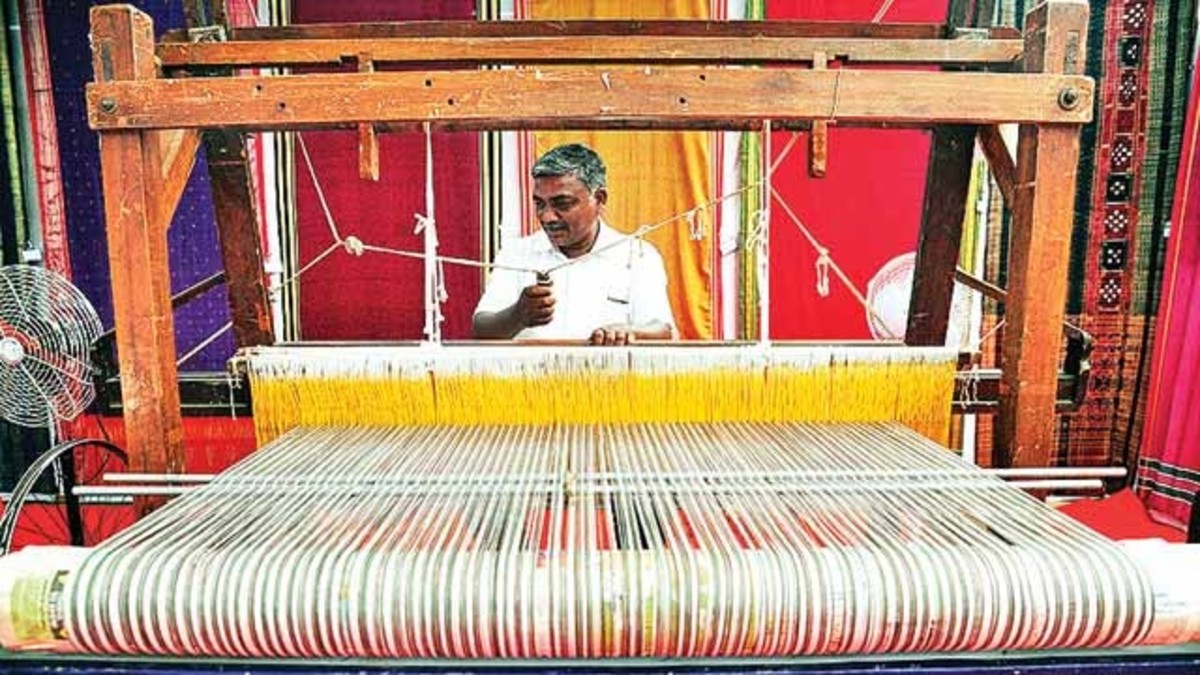

India, a country known for its diverse culture, history, and heritage, has long been celebrated for its rich textile traditions. Among the many forms of art that reflect India’s cultural diversity, traditional handloom weaving stands out as one of the most significant. The process of hand weaving is not just about making cloth; it is a deeply rooted practice that embodies centuries of craftsmanship, tradition, and cultural identity. Each region in India has its own distinct weaving style, contributing to the diverse tapestry of Indian textiles that have been admired and sought after across the world for centuries.
In this article, we will explore the history, cultural significance, and techniques behind India’s traditional handloom weaving, as well as its impact on the global textile industry. Through a detailed examination of key handloom weaving techniques such as Khadi, Banarasi, Kanchipuram, Ikat, and Pashmina, we will uncover how these ancient traditions continue to thrive in modern India. Additionally, we will explore how the weaving industry contributes to rural economies and the ongoing efforts to preserve this art form in the face of industrialization and globalization.
The Historical Significance of Indian Handloom Weaving
The tradition of handloom weaving in India dates back thousands of years, with some of the earliest known evidence of handwoven textiles found in the Indus Valley Civilization (3300–1300 BCE). Archaeological findings, such as fragments of cotton fabric and remnants of spindles and weaving tools, point to the importance of weaving in ancient India. Historical texts, including the Rigveda, mention weaving, and many of India’s earliest urban centers were built around textile production.
Over time, India became renowned for its luxurious fabrics such as silk, cotton, and wool, which were traded with regions across the globe, including the Silk Road and other parts of Asia, the Middle East, and Europe. In fact, India’s rich textile traditions became so well known that they were often referred to as “the fabric of the world.” The beauty, intricacy, and variety of Indian textiles captivated many rulers, traders, and foreign travelers, leading to a widespread appreciation of Indian weaving craftsmanship.
During the Mughal period (1526-1857), India’s weaving culture flourished, with highly detailed and ornate fabrics being produced in cities such as Delhi, Agra, and Lucknow. It was during this time that some of the most famous weaving techniques, like Banarasi and Kanchipuram, began to take form.
In more recent history, handloom weaving played a crucial role in India’s fight for independence, particularly through the Khadi movement led by Mahatma Gandhi. Gandhi promoted the use of handwoven Khadi (a fabric made from homespun cotton) as a symbol of self-reliance, independence, and resistance against British colonial rule, which had systematically undermined India’s indigenous textile industry.
Today, Indian handloom weaving continues to thrive, not only as a living tradition but as a symbol of India’s resilience, creativity, and connection to its past.
Types of Traditional Indian Weaving Techniques
India boasts a wide variety of weaving techniques, each with its own history, regional significance, and unique methods of production. Below are some of the most famous handloom weaving traditions that have shaped India’s textile landscape.
1. Khadi: The Fabric of Freedom
Khadi, or handwoven cotton fabric, is one of the most iconic textiles associated with India’s independence movement. Popularized by Mahatma Gandhi, Khadi is seen as a symbol of self-sufficiency and non-violent resistance. The fabric is made from handspun cotton, and the weaving process is entirely manual, often carried out by skilled artisans using traditional tools like the charkha (spinning wheel) and loom.
Khadi is not just a fabric; it represents India’s rural communities and their efforts to reclaim their livelihoods from colonial exploitation. The revival of Khadi became an essential part of the Swadeshi movement, where Gandhi called for the boycott of British goods and the promotion of domestic handicrafts.
Today, Khadi is woven in various styles, from plain cotton to more complex designs that feature embroidery or dyeing techniques. The fabric has found its way into modern fashion and remains a powerful symbol of Indian heritage, often used in traditional wear like saris and kurta-pajamas, as well as contemporary fashion collections.
2. Banarasi: The Royal Silk of Varanasi
Banarasi silk, originating from the ancient city of Varanasi (also known as Benares), is one of India’s most famous and luxurious handwoven fabrics. Known for its rich texture, intricate designs, and stunning craftsmanship, Banarasi silk is primarily used to create the renowned Banarasi sari, a favorite for brides and royal occasions.
The weaving technique involves the use of high-quality silk threads, often interwoven with gold or silver zari (metallic threads), which adds to the opulence of the fabric. Banarasi weavers employ a method called brocade weaving, where the intricate patterns are created using jacquard looms, allowing for detailed motifs such as floral and paisley designs to be woven directly into the fabric.
Banarasi silks have been highly prized throughout history, especially during the Mughal era. The intricate designs and luxurious finish of Banarasi textiles made them popular at royal courts and among nobility. Despite modern developments in textile production, Banarasi weaving remains an important part of India’s textile industry, and the fabric continues to be produced using traditional methods passed down through generations of weavers.
3. Kanchipuram: The Temple Weaves of Tamil Nadu
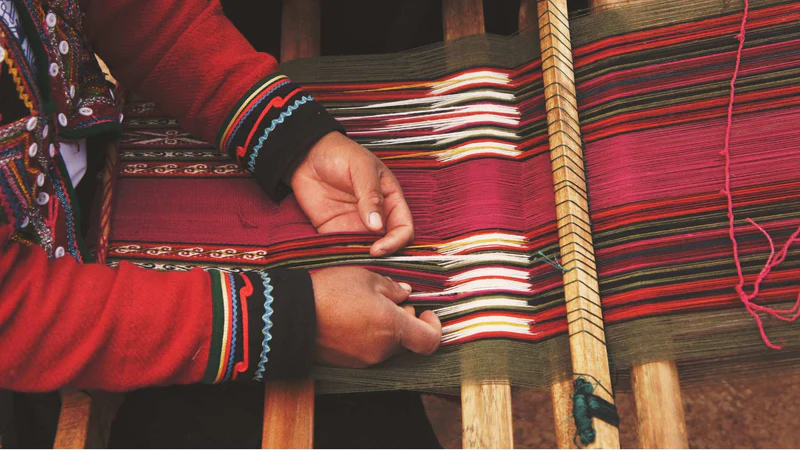
Originating from the town of Kanchipuram in Tamil Nadu, the Kanchipuram sari is one of the finest examples of South Indian weaving. Renowned for its vibrant colors, intricate patterns, and the richness of silk, Kanchipuram saris are often worn for weddings, festivals, and other special occasions.
Kanchipuram weaving is done on handlooms using pure silk threads, often in bright golds, reds, greens, and yellows, and the motifs are inspired by temple architecture, mythology, and nature. The process of weaving Kanchipuram saris is labor-intensive, requiring hours of meticulous work to create the perfect balance of design, texture, and color. The pallu (the decorative end of the sari) is often the highlight of the weaving process, where artisans create elaborate patterns using zari.
The legacy of Kanchipuram weaving dates back to the 4th century CE, and its prominence continued through the Chola dynasty and the subsequent periods. Today, the tradition is still maintained by artisans in Kanchipuram, although modern adaptations and innovations have given Kanchipuram saris a place in both traditional and contemporary fashion.
4. Ikat: The Art of Resisting Dye
Ikat weaving is a technique that involves resist-dyeing threads before weaving them into fabric, creating vibrant and intricate patterns. This method of dyeing is practiced in various parts of India, including Odisha, Telangana, and Gujarat, and the fabrics produced are commonly used for creating saris, dupattas, and fabrics for home decor.
The process of creating Ikat involves tying and dyeing the yarns in specific patterns, which gives the fabric a blurred, almost watercolor-like effect. This technique is incredibly labor-intensive, as each thread is dyed and woven separately, and the patterns often require great skill and precision to align the threads correctly during the weaving process.
Ikat textiles are highly regarded for their intricate designs and vibrant colors, often reflecting the traditional patterns of the regions where they are produced. In modern India, Ikat weaving has become a symbol of artistic expression, merging ancient techniques with contemporary fashion trends.
5. Pashmina: The Wool of the Himalayas
Pashmina, a type of cashmere wool, is produced in the high-altitude regions of the Kashmir Valley in India. Pashmina is renowned for its softness, warmth, and lightness, making it one of the most luxurious and coveted textiles in the world. The wool is sourced from the Pashmina goats that roam the Himalayan regions, and the fibers are painstakingly hand-spun and handwoven into delicate shawls, scarves, and other garments.
The traditional Pashmina weaving process involves intricate handloom techniques, often incorporating embroidery or kashmiri needlework. The woven textiles are then carefully dyed in a range of rich colors, using both natural and synthetic dyes. Pashmina shawls are often adorned with paisley motifs and floral designs, creating a visual appeal that complements the softness of the fabric.
Pashmina has long been associated with royalty, and the fabric is considered a symbol of luxury and elegance. In the modern era, Pashmina shawls and scarves continue to be in high demand worldwide, with artisans in Kashmir still producing these textiles using age-old techniques.
The Economic and Social Impact of Handloom Weaving in India
While traditional handloom weaving is an art form, it also plays a significant role in the rural economies of India. Handloom weaving is a source of livelihood for millions of rural artisans, most of whom come from marginalized communities. It is estimated that the handloom sector in India employs around 4.5 million people, making it one of the largest industries in the country.
Many of India’s handloom weavers work in small-scale workshops or home-based units, which allows them to maintain close ties with family and community. The survival of handloom weaving is closely linked to the welfare of these communities, as it provides economic stability, preserves cultural heritage, and sustains traditional craftsmanship.
However, the handloom industry also faces significant challenges. With the rise of machine-made textiles and fast fashion, the demand for handwoven fabrics has decreased in certain markets, pushing many artisans out of work. Additionally, the mass production of cheaper textiles has made it harder for traditional weavers to compete in a globalized market.
Efforts to support and preserve India’s handloom heritage have led to initiatives such as Handloom Mark and various government schemes aimed at providing financial aid, training, and global market access to handloom weavers. Through these efforts, India hopes to ensure that handloom weaving remains a thriving and sustainable industry.
Conclusion: Weaving the Future with Tradition
Indian handloom weaving is not just a craft; it is a living testament to the country’s deep cultural heritage and artistic excellence. From the Khadi of Gandhian fame to the intricate Banarasi silks and Pashmina shawls, the diversity and richness of India’s textile traditions are unparalleled. By preserving and promoting these weaving techniques, India ensures that the artistry of its weavers continues to thrive, enriching both the cultural landscape and the global textile industry.
As the world continues to embrace sustainable fashion and ethically produced textiles, the traditional handloom industry in India stands as a beacon of craftsmanship, resilience, and innovation. The journey of traditional Indian weaving is far from over, and with the support of artisans, designers, and global consumers, these ancient techniques will continue to weave their story into the fabric of India’s future