




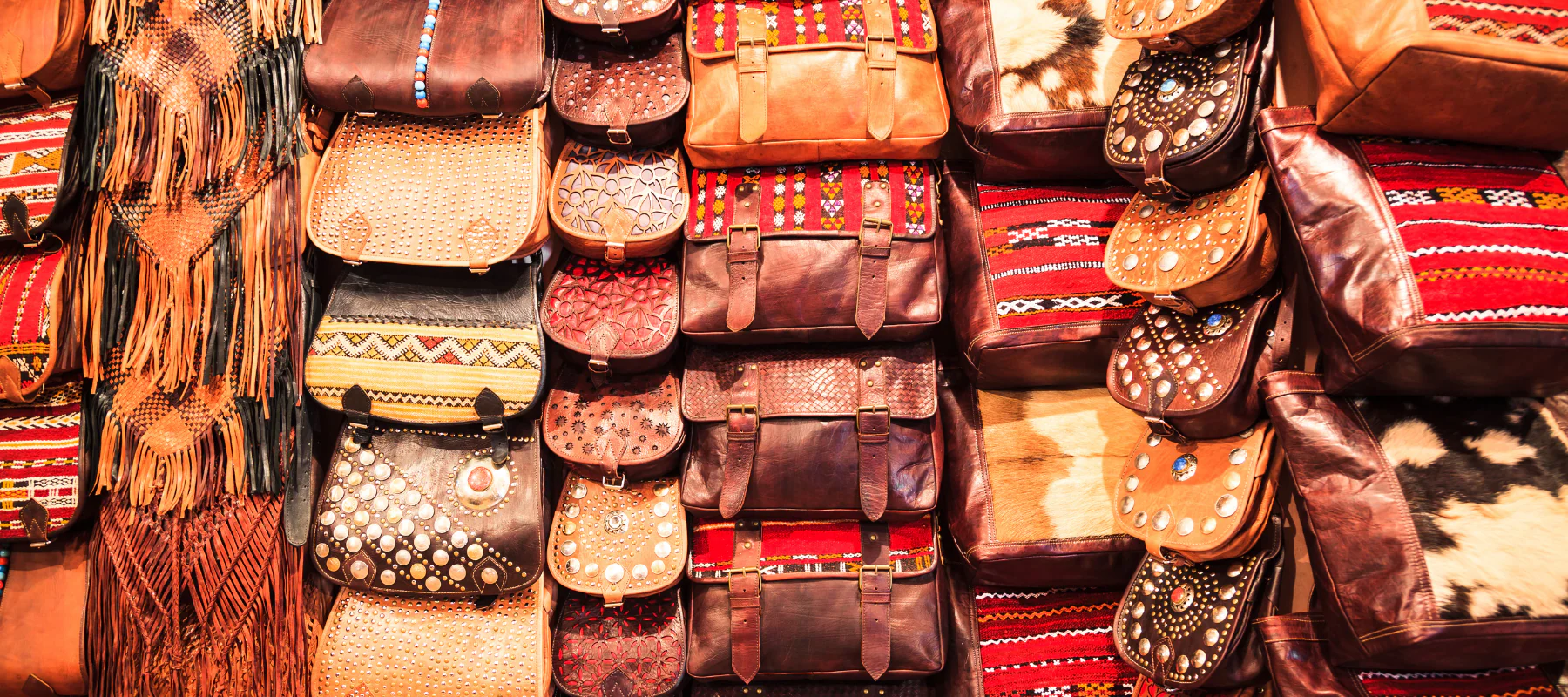

Morocco, with its rich cultural heritage and centuries-old craftsmanship, is home to some of the most remarkable artisanal traditions in the world. Among these, Moroccan leather craft stands out as one of the most iconic and revered. From the bustling streets of Marrakesh to the vibrant markets of Fez, Moroccan leather products have captivated the hearts of travelers and collectors alike. Whether it’s a hand-stitched leather bag, a decorative pouf, or intricately designed slippers, Moroccan leather items are not only functional but also serve as works of art.
At the heart of Moroccan leather production lies a traditional tanning process that has been passed down through generations, unchanged by modern industrial methods. The tanneries of Fez, for example, are renowned worldwide for their exceptional craftsmanship and deep connection to the land. This article explores the history, techniques, and cultural significance of Moroccan leather craft, shedding light on how this ancient art has stood the test of time while evolving into a symbol of Moroccan identity.
1. The History and Cultural Significance of Moroccan Leather Craft
1.1. The Origins of Leather Craft in Morocco
The roots of leather production in Morocco can be traced back to the ancient civilizations that once occupied the region, including the Phoenicians and the Romans. However, it was during the Islamic Golden Age (7th to 13th centuries) that leather tanning and craftsmanship truly flourished. Influenced by trade routes that spanned from Europe to Africa, Moroccan artisans mastered the art of leatherworking, incorporating techniques and designs from the broader Mediterranean region, Africa, and the Middle East.
By the time the Almohad dynasty (12th to 13th centuries) rose to power in Morocco, the country had become a hub of leather trade and craftsmanship, with cities like Fez and Marrakesh leading the way in production. During this period, leather products such as shoes, saddles, and garments became highly sought after not just for their utility, but also for their artistic quality. Moroccan leather goods were exported across North Africa, the Middle East, and Europe, contributing to the country’s growing reputation for craftsmanship.
1.2. Leather Craft in Moroccan Culture
Leather is not merely a commodity in Morocco; it holds deep cultural significance. For centuries, Moroccan artisans have treated leather as a canvas for their creativity. Whether it’s the intricate geometric patterns on a leather pouf or the detailed stitching on a pair of babouches (traditional slippers), leather products have been used to showcase local traditions, craftsmanship, and aesthetic values.
In Moroccan culture, leather goods also play a role in everyday life and rituals. For example, babouches are worn by both men and women as part of traditional attire, while leather bags and purses are commonly used to carry goods during market visits or family gatherings. In addition, leather craftsmanship is often passed down from father to son, creating a close-knit community of artisans who are deeply committed to preserving the tradition.
2. The Tanning Process: From Raw Hide to Refined Leather
2.1. Traditional Tanning in Fez and Marrakesh
The process of turning raw animal hides into the soft, supple leather that Morocco is known for is both labor-intensive and environmentally demanding. The famous tanneries of Fez (known as Chouara Tannery) and Marrakesh offer a glimpse into the ancient techniques that have been used for centuries to produce some of the world’s finest leather goods.
The tanning process in Morocco is primarily a vegetable tanning technique, which uses natural substances from plants, fruits, and tree bark to treat the hides. This method is more environmentally friendly than modern chemical processes, which rely on synthetic compounds.
- Step 1: Preparation
The process begins with the collection of animal hides—usually from goats, cows, or sheep—which are cleaned and soaked in a solution of water and quicklime to remove hair and fat. The hides are then soaked in a water and salt mixture for several days to soften them. - Step 2: Tanning
After preparation, the hides are placed in large vats where they are treated with plant-based substances. One of the most important tanning agents used in Morocco is tannins, which are extracted from oak, sumac, and pomegranate. These natural elements help transform the hide into durable, pliable leather, rich in color. - Step 3: Drying and Dyeing
Once tanned, the leather is laid out to dry in the open air, often in the sun, which helps further soften the material. Moroccan artisans are known for their vibrant dyeing techniques. Using natural dyes, they create a broad spectrum of colors—from earthy browns and reds to bright oranges, blues, and yellows. The dyeing process itself is an art form, with each artisan having their own unique methods and recipes for achieving the perfect shade. - Step 4: Crafting
After the leather is fully tanned and dyed, it is ready for the final step: crafting. Artisans use the leather to create a wide variety of products, including bags, shoes, belts, poufs, and jewelry. Skilled workers cut, stitch, and decorate the leather by hand, often using traditional tools like needles, awls, and carving tools.
2.2. The Role of Artisans in the Process
The craftsmanship involved in creating Moroccan leather goods is passed down through generations. Skilled artisans often spend years perfecting their techniques, learning from older generations and incorporating their own innovations into their work. The relationship between artisans and their craft is deeply personal—each piece of leather that they work with carries a sense of pride, tradition, and history.
Artisans who specialize in leathercrafting in Morocco are often considered masters of their trade. Their ability to transform raw materials into functional works of art is what makes Moroccan leather products highly coveted in global markets.
3. Moroccan Leather Products: Beauty and Functionality Combined
3.1. Babouches: Traditional Moroccan Slippers
One of the most iconic leather products from Morocco is the babouche—a traditional, backless slipper made from soft, supple leather. Babouches are worn by both men and women across Morocco and are available in various colors, designs, and styles. These slippers are often adorned with intricate stitching, beads, or even small metal embellishments.
The versatility of babouches makes them a staple in Moroccan culture. They are worn as everyday footwear, as well as for special occasions. The soft leather molds to the foot, making them comfortable for both indoor and outdoor use.
3.2. Leather Bags and Purses
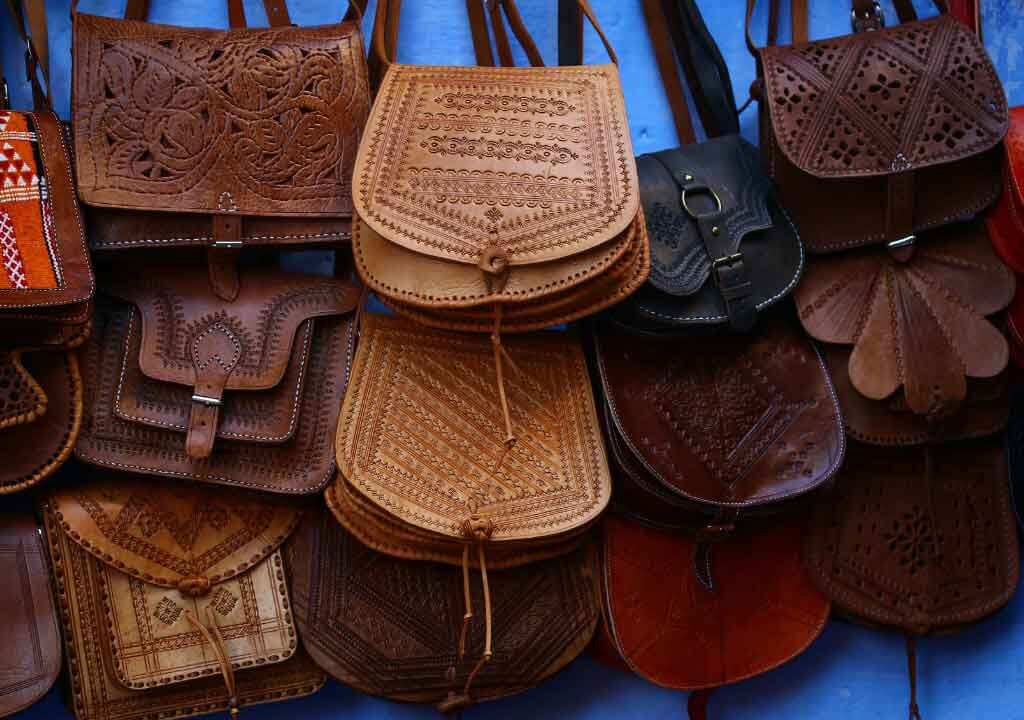
Moroccan leather bags are renowned for their quality and design. Crafted from durable leather and often featuring unique geometric patterns, Moroccan leather bags have become popular with international fashion enthusiasts. From the small, simple purses to large, handcrafted totes, each bag is an expression of the artisan’s skills and creativity.
A variety of leather wallets and satchels are also produced, showcasing detailed stitching and vibrant colors. The bags are known for their durability, making them practical for everyday use, while also reflecting the rich artistic culture of Morocco.
3.3. Poufs and Upholstered Leather Furniture
Another highly sought-after leather item is the Moroccan leather pouf. These round, cushioned pieces are commonly used in homes for seating or as decorative elements. Poufs are often crafted from high-quality leather and are filled with cotton or wool to provide comfort. The leather is usually dyed in a range of colors and decorated with intricate stitching or patterns.
In addition to poufs, Moroccan leather is used to upholster furniture, such as chairs, ottomans, and sofas. These pieces of furniture add a touch of elegance and exotic appeal to any room.
4. Moroccan Leather in the Global Market
4.1. Exporting Moroccan Leather Goods
Moroccan leather has made its way to markets across the globe, from Europe and the United States to the Middle East and Asia. The country’s leather products have become highly coveted due to their quality, craftsmanship, and unique designs. Cities like Marrakesh, Fez, and Casablanca are known for their bustling souks, where tourists can find an abundance of leather goods.
Many travelers seek out authentic Moroccan leather products as souvenirs, while collectors often look for limited-edition or specially crafted items. The export of Moroccan leather goods has become an important aspect of the country’s economy, generating significant revenue for local artisans and businesses.
4.2. The Impact of Tourism on Leather Craft
The growing influx of tourists in Morocco has led to increased demand for handmade leather goods. As tourists flock to cities like Marrakesh and Fez, they often visit the tanneries and artisan workshops to observe the leather-making process and purchase products directly from the craftsmen.
While tourism has helped boost the leather industry, it has also raised questions about ethical production and the sustainability of traditional methods. As demand increases, there is a growing push to ensure that artisans receive fair compensation for their work and that the production methods remain environmentally sustainable.
5. Ethical Considerations and Sustainability
5.1. Environmental Impact
The leather tanning process, particularly the use of chemical dyes and tanning agents, can have significant environmental consequences. However, many Moroccan tanneries are moving towards more sustainable practices, utilizing plant-based tanning agents and reducing the use of harmful chemicals. These environmentally friendly techniques help minimize the impact on local ecosystems while preserving the traditional craftsmanship that has defined Moroccan leather goods for centuries.
5.2. Fair Trade and Artisan Welfare
As the demand for Moroccan leather grows, ensuring fair compensation and working conditions for artisans is becoming increasingly important. Many artisans work in small family-run businesses, and while they take pride in their work, the financial rewards are not always proportional to the labor and skill involved. Initiatives aimed at promoting fair trade and artisan welfare are essential to ensuring that the benefits of the leather industry are shared equitably.
6. Conclusion: The Enduring Legacy of Moroccan Leather Craft
Moroccan leather craftsmanship is more than just a trade; it is an integral part of the country’s cultural heritage. From the tanneries of Fez to the bustling souks of Marrakesh, leather goods have long been a symbol of Moroccan identity and artistry. Despite challenges such as ethical concerns and environmental impact, Moroccan leather continues to be a symbol of timeless tradition, quality, and beauty.
For those lucky enough to experience it firsthand, the world of Moroccan leather offers a glimpse into a rich, centuries-old tradition that blends artistry with functionality. Whether it’s a handcrafted babouche, a beautifully dyed leather pouf, or a custom-made leather bag, Moroccan leather products represent a unique fusion of culture, history, and craftsmanship that will continue to captivate the world for generations to come.