





Introduction: Cooking as a Cultural Language in Morocco
Travel is often described as a way of seeing the world, but some of the deepest understanding comes not from observation alone, but from participation. In Morocco, few activities offer a more immersive and insightful cultural experience than participating in a local cooking class. Moroccan cuisine is not merely food prepared for nourishment; it is a living expression of history, geography, family structure, religious values, and communal identity.
To take part in a Moroccan cooking class is to step inside this cultural system. It is an experience that engages the senses, the intellect, and social awareness at the same time. From selecting spices in a bustling market to slowly simmering a tagine over gentle heat, cooking becomes a structured yet intimate form of cultural exchange. This article explores Moroccan cooking classes as a professional and meaningful travel experience, examining their culinary foundations, cultural significance, educational value, and broader role in sustainable and experiential tourism.
1. Moroccan Cuisine: A Historical and Cultural Overview
1.1 A Crossroads of Civilizations
Moroccan cuisine reflects centuries of cultural interaction. Berber traditions form its foundation, enriched over time by Arab, Andalusian, Jewish, Ottoman, and sub-Saharan African influences. Each wave of history contributed ingredients, techniques, and symbolic meanings to the Moroccan table.
Cooking classes often begin with this historical context, helping participants understand why Moroccan dishes balance:
- Sweet and savory flavors
- Slow-cooking methods
- Complex spice combinations
Food, in Morocco, is history made edible.
1.2 Geography and Ingredients
Morocco’s varied geography—from the Atlas Mountains to Atlantic coastlines and Saharan edges—shapes its culinary diversity. Cooking classes highlight how regional ingredients such as olives, preserved lemons, argan oil, seafood, and grains reflect local environments and seasonal availability.
2. Why Cooking Classes Matter in Cultural Travel
2.1 From Consumption to Participation
Traditional tourism often positions travelers as consumers. Cooking classes reverse this dynamic. Participants become learners and collaborators, engaging directly with local knowledge rather than passively observing it.
This shift transforms food from a product into a process, emphasizing effort, tradition, and skill.
2.2 Learning Through the Hands
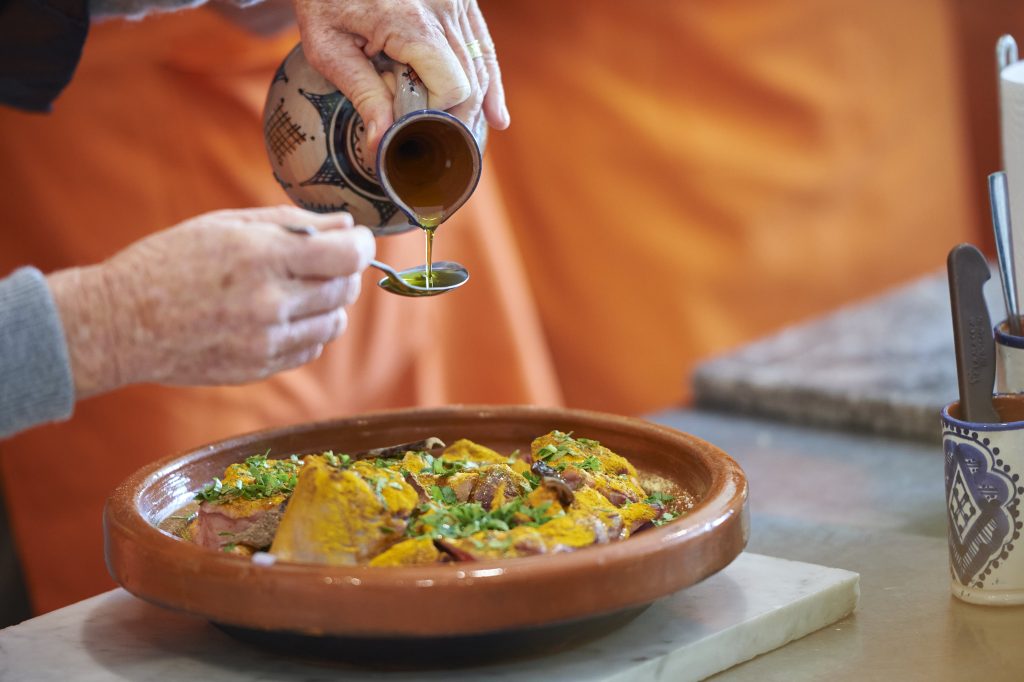
Cooking is an embodied form of learning. Measuring spices by sight, kneading dough by touch, and adjusting heat by intuition provide insights that written recipes cannot. This hands-on approach deepens cultural understanding and memory retention.
3. The Structure of a Moroccan Cooking Class
3.1 Market Visits: The Classroom Begins Outside
Many Moroccan cooking classes begin with a guided visit to a local market (souk). Here, participants learn to:
- Identify spices and herbs
- Understand ingredient quality and freshness
- Observe local shopping customs
This stage introduces the social context of food—bargaining, seasonal rhythms, and daily routines.
3.2 Kitchen Spaces: Homes, Riads, and Culinary Schools
Classes may take place in private homes, traditional riads, or professional teaching kitchens. Each setting offers a different perspective:
- Home kitchens emphasize family tradition
- Riads combine hospitality with heritage architecture
- Culinary schools provide structured instruction and technical clarity
Regardless of location, kitchens are treated as communal spaces.
4. Core Elements of Moroccan Cooking Instruction
4.1 Understanding Spices Beyond Recipes
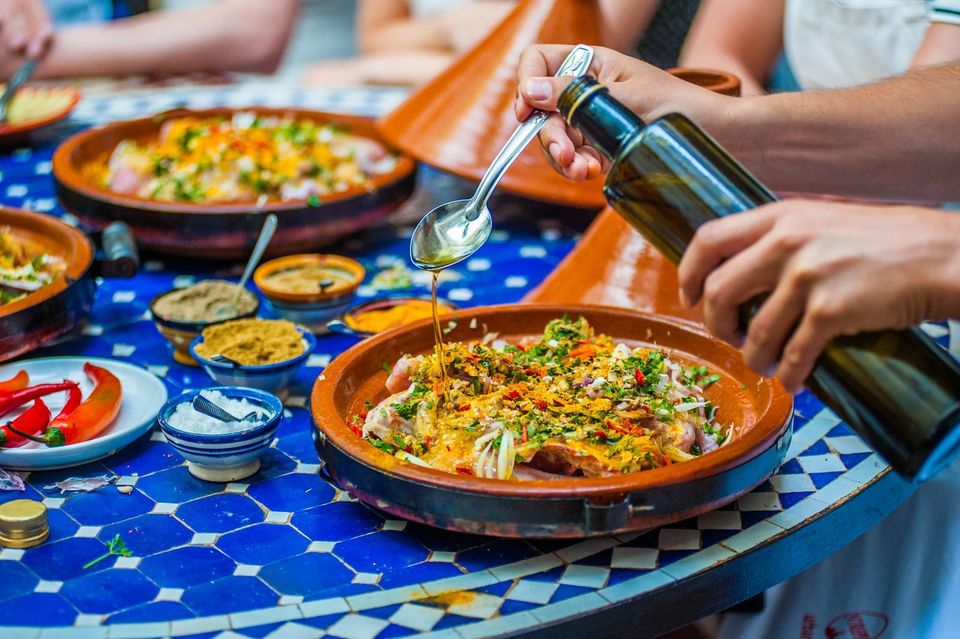
Moroccan cuisine is famous for its spices, yet cooking classes emphasize balance rather than intensity. Participants learn the cultural logic behind spice use:
- Warming spices for depth
- Aromatic herbs for freshness
- Sweet spices for contrast
Rather than rigid measurements, instructors teach intuition and adjustment.
4.2 Techniques Over Shortcuts
Traditional Moroccan cooking values time and patience. Classes often focus on:
- Slow simmering
- Layering flavors gradually
- Respecting cooking rhythms
This emphasis contrasts sharply with fast-paced modern cooking styles and reinforces cultural values of care and attentiveness.
5. Signature Dishes as Cultural Narratives
5.1 Tagine: Symbol of Moroccan Cuisine
The tagine is both a cooking vessel and a culinary philosophy. Its design supports slow, moist cooking, preserving flavor and texture. Cooking classes use the tagine to teach:
- Heat control
- Ingredient sequencing
- Flavor integration
Each tagine tells a story shaped by region, season, and household tradition.
5.2 Couscous: Community and Ritual
Traditionally prepared for communal gatherings, couscous represents hospitality and generosity. Cooking classes often highlight its social significance, emphasizing shared preparation and collective eating.
6. Social Dynamics in Moroccan Cooking Classes
6.1 Hospitality as Cultural Practice
Moroccan cooking classes are deeply rooted in hospitality. Instructors often treat participants as guests rather than customers, reinforcing cultural norms of generosity and warmth.
Tea breaks, shared meals, and informal conversation are integral parts of the experience.
6.2 Gender, Family, and Culinary Knowledge
Cooking knowledge in Morocco has traditionally been passed through family lines, often from older to younger generations. Classes provide insight into:
- Family roles
- Intergenerational knowledge transfer
- The evolving role of women in culinary education
These dynamics enrich understanding beyond recipes.
7. Educational Value for Travelers
7.1 Cultural Literacy Through Cuisine
Participating in a cooking class enhances cultural literacy by revealing:
- Religious influences on food practices
- Social etiquette around meals
- The symbolic role of food in celebrations
Travelers gain tools to interpret daily life more accurately.
7.2 Skills That Travel Home
Unlike many travel experiences, cooking skills remain useful long after the journey ends. Preparing Moroccan dishes at home allows travelers to:
- Reconnect with memories
- Share cultural stories
- Sustain long-term engagement with Moroccan culture
8. Sensory Depth and Memory Formation
8.1 Taste and Smell as Memory Anchors
Sensory experiences—especially taste and smell—are closely linked to memory. Cooking classes engage these senses intensely, creating vivid and lasting recollections.
Spice aromas, simmering sounds, and shared meals anchor experiences emotionally.
8.2 The Role of Time and Presence
Cooking requires attention and patience. This focused engagement enhances presence, allowing participants to slow down and fully inhabit the moment—an increasingly valued quality in modern travel.
9. Cooking Classes and Sustainable Tourism
9.1 Supporting Local Economies
Cooking classes often source ingredients locally and employ local instructors, creating direct economic benefits. This model supports:
- Small producers
- Family-run businesses
- Culinary heritage preservation
9.2 Cultural Preservation Through Education
By teaching traditional methods to international participants, cooking classes help preserve culinary knowledge that might otherwise be lost amid globalization and modernization.
10. Ethical and Respectful Participation
10.1 Learning With Humility
Effective participation requires cultural sensitivity. Travelers are encouraged to approach cooking classes not as entertainment, but as educational exchanges rooted in respect.
10.2 Avoiding Cultural Simplification
Professional cooking classes avoid reducing Moroccan cuisine to stereotypes. They emphasize diversity, regional variation, and evolving traditions rather than a single “authentic” narrative.
11. Variations in Moroccan Cooking Classes
11.1 Urban vs. Rural Experiences
Urban classes often highlight culinary refinement and historical influences, while rural experiences emphasize simplicity, seasonal cooking, and agricultural context. Each offers distinct educational value.
11.2 Short Workshops and Multi-Day Programs
Options range from half-day introductions to immersive multi-day courses. Longer programs allow deeper exploration of techniques, ingredients, and cultural context.
12. The Role of Storytelling in Instruction
12.1 Recipes as Personal Histories
Instructors frequently share personal stories connected to dishes—family traditions, regional customs, or festive occasions. These narratives transform recipes into cultural artifacts.
12.2 Dialogue and Exchange
Cooking classes encourage dialogue rather than one-way instruction. Participants ask questions, compare food cultures, and reflect on similarities and differences.
13. Cooking as a Bridge Between Cultures
13.1 Shared Humanity Through Food
Despite cultural differences, cooking reveals shared human experiences: nourishment, care, celebration, and creativity. This universality fosters empathy and mutual understanding.
13.2 Breaking Down Cultural Distance
Preparing and sharing a meal together dissolves social barriers. Language differences become less significant as gestures, tastes, and cooperation take precedence.
14. Long-Term Impact of the Experience
14.1 Beyond the Trip Itself
Many travelers describe Moroccan cooking classes as highlights of their journey—not because of novelty, but because of depth. The experience reshapes how they view:
- Food preparation
- Cultural learning
- Travel priorities
14.2 Influencing Future Travel Choices
Such participatory experiences often encourage travelers to seek deeper engagement in future trips, favoring learning-based and community-centered activities.
Conclusion: Cooking Classes as Cultural Immersion
Participating in a Moroccan cooking class is far more than a culinary lesson. It is an entry point into a complex cultural system where history, geography, family, and identity converge at the table. Through hands-on preparation, shared meals, and meaningful dialogue, travelers gain insight that no guidebook or restaurant visit alone can provide.
In an era when travelers increasingly seek authenticity, connection, and learning, Moroccan cooking classes stand out as a powerful model of experiential travel. They transform cuisine into conversation, recipes into stories, and visitors into participants.
Ultimately, to cook in Morocco is to listen—to the land, to tradition, and to the people who keep that tradition alive. And in doing so, travelers carry home not just flavors, but understanding.