





Rome, the eternal city, is a living testament to the grandeur and ingenuity of the Roman Empire. With a history spanning over two and a half millennia, Rome is home to some of the most significant and well-preserved historical ruins in the world. These ruins, scattered throughout the city and its outskirts, provide a fascinating glimpse into the lives of ancient Romans and their lasting influence on art, politics, architecture, and culture.
The ancient Roman Empire once spanned three continents, from the British Isles to the Middle East, and from North Africa to Europe. Despite its decline, the legacy of Rome endures, particularly through its monumental buildings and structures. In this article, we will explore the most iconic Roman historical ruins in Rome, delving into their architectural significance, historical importance, and the stories they tell about one of the most influential civilizations in history.
The Significance of Roman Historical Ruins
Roman ruins are more than just remnants of the past; they are enduring symbols of the Roman Empire’s strength, technological advancement, and cultural achievements. Roman architecture, engineering, and urban planning continue to influence modern cities worldwide. Here are a few reasons why these ruins are so important:
- Architectural Innovation: Romans were pioneers in building techniques, developing arches, vaults, and domes, which allowed for the construction of larger, more durable buildings. Their use of concrete, a material that became widely used during the Roman Empire, revolutionized construction and enabled the creation of vast structures like the Pantheon and the Colosseum.
- Cultural Influence: The Romans were not only master builders but also skilled in law, governance, and the arts. The ruins of Rome reflect this rich cultural heritage, from the legislative heart of the Roman Forum to the art-filled halls of the Villa Adriana.
- Engineering Feats: The Romans were exceptional engineers, responsible for the construction of aqueducts, roads, and sewers, many of which still stand today. These engineering marvels were crucial for maintaining Roman cities and ensuring the prosperity of the empire.
- Political Legacy: The Romans established some of the earliest forms of republican and imperial governance, which shaped the political systems of the Western world. The Roman Senate and other political institutions of the city still influence modern governments.
Iconic Roman Historical Ruins in Rome
1. The Colosseum: The Gladiatorial Arena
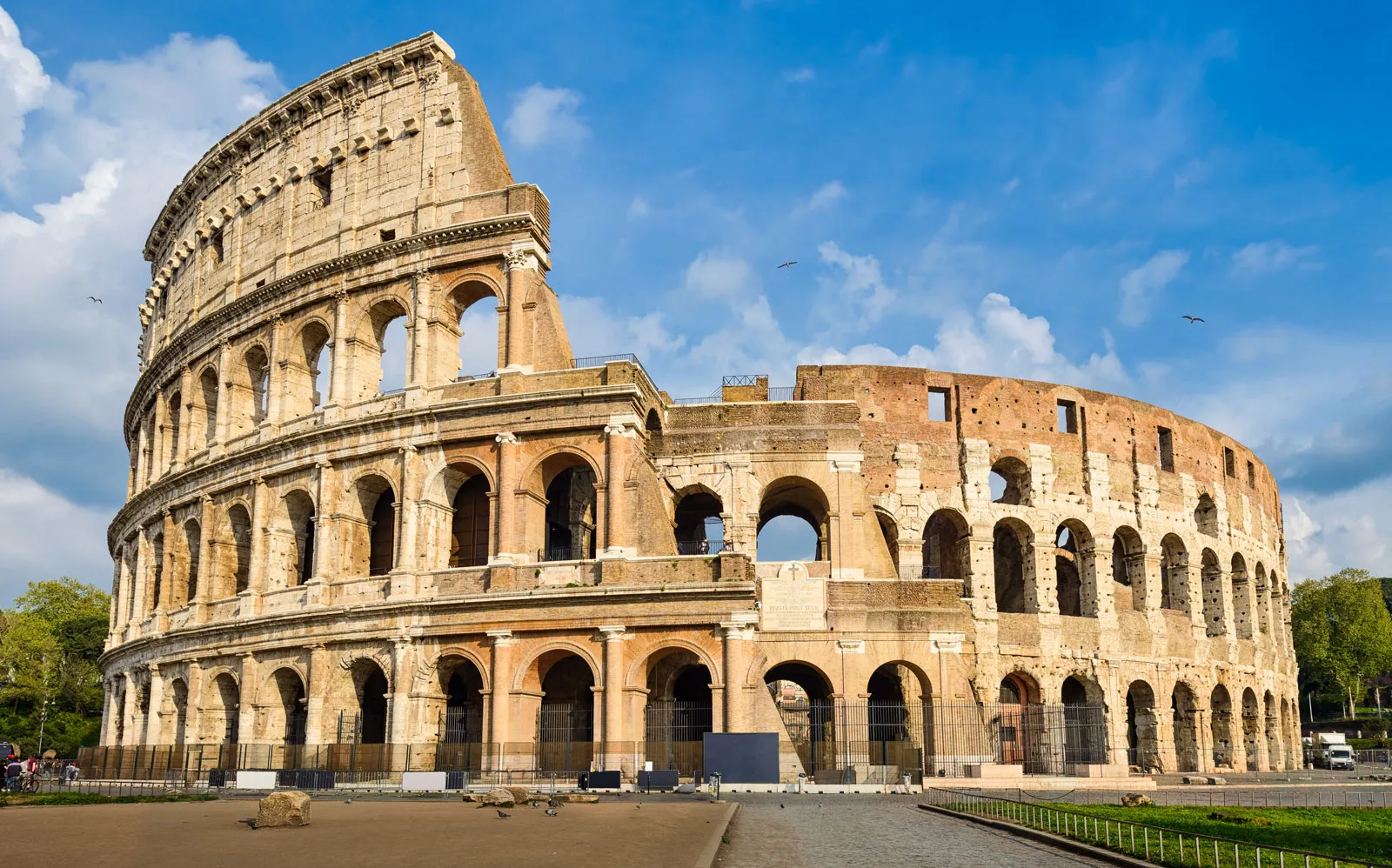
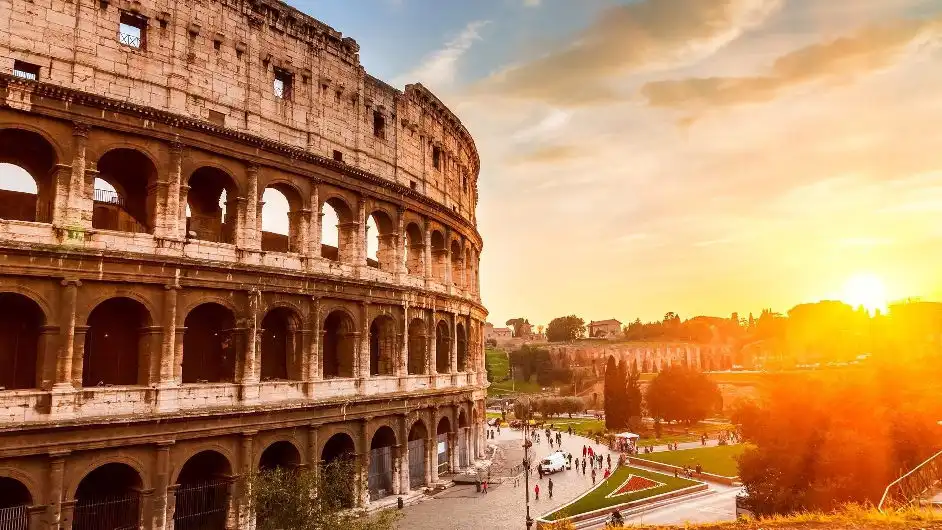
Arguably the most famous of Rome’s ancient ruins, the Colosseum (or Flavian Amphitheatre) is a monumental structure that symbolizes the might and spectacle of the Roman Empire. Built between 70 and 80 CE under the emperors Vespasian and Titus, the Colosseum was the largest amphitheater ever constructed and could hold up to 50,000 spectators.
Architectural Feats
The Colosseum’s design is a marvel of Roman engineering. It features a complex system of arches and vaults, enabling the amphitheater to support immense weight while maintaining its graceful proportions. The structure was built using concrete and stone, and its exterior was originally adorned with marble.
The Colosseum was primarily used for gladiatorial combat, animal hunts, and other public spectacles such as mock naval battles, executions, and theatrical performances. These events were used to entertain the public and demonstrate the power of the emperors.
Historical Significance
The Colosseum is also an emblem of Roman political propaganda, showcasing the emperors’ power to control the masses through entertainment. Despite being partially damaged by earthquakes and stone robbers, the Colosseum remains one of the most enduring symbols of the Roman Empire’s grandeur.
2. The Roman Forum: The Heart of Roman Public Life
The Roman Forum was the center of political, commercial, and religious life in ancient Rome. Situated between the Capitoline Hill and the Palatine Hill, the Forum was the site of important public meetings, elections, and judicial proceedings. Today, it is a sprawling archaeological site that offers visitors a window into the political and social structure of ancient Rome.
The Temples and Basilicas
The Roman Forum is home to several ancient temples, basilicas, and public buildings. Among the most notable are:
- The Temple of Saturn: Built in 497 BCE, this was one of the oldest temples in Rome and served as the treasury for the Roman Republic.
- The Temple of Julius Caesar: Erected by Emperor Augustus in 29 BCE to honor the deified Julius Caesar, this temple marks the spot where Caesar was cremated after his assassination.
- The Basilica Julia and Basilica Aemilia: These were large public buildings used for legal proceedings and business transactions.
The Senate House (Curia), where the Senate held its meetings, is also a key feature of the Roman Forum. This building symbolizes the political heart of Rome, where decisions were made that affected the entire empire.
3. The Pantheon: The Temple to All Gods
The Pantheon is one of the best-preserved and most influential buildings of ancient Rome. Originally built by Marcus Agrippa during the reign of Augustus in 27 BCE, the temple was later rebuilt by Emperor Hadrian around 126 CE after the original structure was destroyed by fire.
Architectural Mastery
The Pantheon’s most remarkable feature is its massive, unreinforced concrete dome, which remains the largest of its kind in the world. The dome’s perfect symmetry and the use of oculus, an open skylight at the center, create a sense of openness and connection to the heavens. The Pantheon’s design had a lasting impact on architecture, influencing later structures such as St. Peter’s Basilica in Vatican City.
Religious Significance
Originally built as a temple to all Roman gods, the Pantheon was later converted into a Christian church in the 7th century. This conversion helped preserve the building and its remarkable architecture, and today, it remains an active place of worship.
4. The Baths of Caracalla: Roman Leisure and Engineering
The Baths of Caracalla were one of the largest and most opulent public baths in ancient Rome. Built between 212 and 216 CE during the reign of Emperor Caracalla, these baths were a place for Romans to relax, socialize, and engage in leisure activities.
An Engineering Marvel
The Baths of Caracalla covered an area of about 25 hectares and could accommodate up to 1,600 bathers at once. The complex featured hot and cold baths, swimming pools, exercise areas, gardens, and even libraries. The baths were heated by a sophisticated system of hypocausts, an underground heating system that warmed the floors and walls.
Despite being partially in ruins today, the Baths of Caracalla remain a testament to the Romans’ engineering ingenuity and their appreciation for public leisure.
5. The Palatine Hill: The Birthplace of Rome
The Palatine Hill is one of the seven hills of Rome and is considered the birthplace of the city. According to Roman mythology, it was on this hill that Romulus and Remus, the legendary twins, were found by a she-wolf and raised by a shepherd. Over time, the Palatine Hill became the site of imperial palaces and residences.
Imperial Palaces
The House of Augustus and the Domus Augustana were among the grand palaces built on the Palatine Hill. These lavish homes were constructed by the emperors and their families and served as the center of political and social life during the Roman Empire.
The hill also offers stunning views of the Roman Forum and the Colosseum, providing visitors with a comprehensive perspective of the ancient city’s layout.
6. The Circus Maximus: Chariot Racing and Entertainment
The Circus Maximus was an ancient Roman chariot-racing stadium and the largest entertainment venue in the city. It could hold up to 250,000 spectators, making it the largest stadium in the ancient world. The Circus Maximus was primarily used for chariot races, which were immensely popular in Rome.
Races and Spectacles
Chariot races were one of the most popular forms of entertainment in ancient Rome, and the Circus Maximus was the premier venue for these thrilling events. The races were not only a form of entertainment but also served as a way for emperors to gain favor with the masses. The stadium also hosted other events such as religious festivals, gladiator contests, and triumphal processions.
Today, the Circus Maximus is a public park, and while the original structure no longer stands, the site remains an important historical and cultural landmark.
7. Hadrian’s Villa: The Extravagance of the Emperor
Located near Tivoli, just outside Rome, Hadrian’s Villa (Villa Adriana) was a vast imperial complex built by Emperor Hadrian in the 2nd century CE. The villa is a masterpiece of Roman architecture and landscaping, featuring palatial buildings, gardens, temples, and even an artificial lake.
Architectural Diversity
Hadrian’s Villa was an eclectic blend of architectural styles and was designed to imitate some of the most famous buildings of the empire. The villa includes a replica of the Canopus, an Egyptian-inspired pool, and the Teatro Marittimo, a circular island villa surrounded by water.
Hadrian’s Villa is a testament to the emperor’s wealth, power, and cultural interests. Today, it is a UNESCO World Heritage site and a popular tourist destination.
Conclusion: A Legacy Immortalized in Stone
Rome’s historical ruins are more than just ancient stones and pillars; they are monuments to the power, sophistication, and cultural achievements of the Roman Empire. Whether you are exploring the grandeur of the Colosseum, wandering through the Roman Forum, or admiring the architecture of the Pantheon, these ruins offer a direct connection to the past, allowing us to experience the incredible achievements of a civilization that shaped much of the modern world.
Visiting these ruins not only offers a glimpse into the lives of the ancient Romans but also provides valuable lessons on architecture, engineering, politics, and culture that continue to influence us today. The historical sites of Rome are an enduring reminder of the greatness of the Roman Empire and its lasting impact on human civilization.